The History of Fortnite: From Save the World to a Platform
How Fortnite grew from a co-op zombie game into a battle royale giant and then a platform of modes, from Save the World to UEFN and LEGO Fortnite.

Fortnite is unusual among battle royale games because it was not designed as one. It started life as a cooperative survival game about building forts and fighting off monsters, spent years in development and was then given a battle royale mode almost as a side project. That mode became one of the biggest games in the world. Since then, Fortnite has kept transforming: into a venue for live events and concerts, a creative toolset and finally a platform hosting entirely different games under one name.
This history follows that journey with dates checked against Wikipedia’s articles on Fortnite and Fortnite Battle Royale, plus contemporary news reporting. For how a match actually plays, see our Fortnite beginner’s guide.
Origins: A Game Jam at Epic
According to Wikipedia, Fortnite began around 2011 as an internal game jam project at Epic Games, after the studio finished Gears of War 3. The concept combined building, crafting and cooperative combat against waves of enemies, in a cartoonish style that was very different from the gritty look of Gears.
Development took years. The game that eventually emerged, now known as Save the World, was a player-versus-environment experience: players gather resources, build fortifications and defend objectives against husks, the game’s zombie-like enemies, usually together with friends in small co-op groups. Building was central from the very beginning, which would turn out to be crucial for what came next.
Save the World entered paid early access on 25 July 2017 and reached one million players in August 2017.
2017: Battle Royale Arrives
2017 was the year battle royale exploded, driven by PlayerUnknown’s Battlegrounds, which had entered early access in March. Epic saw the opportunity. Wikipedia reports that Fortnite’s battle royale mode was built in about two months, using Save the World’s assets and building mechanics, and released as a free-to-play mode in September 2017; the Battle Royale article gives the release date as 26 September 2017.
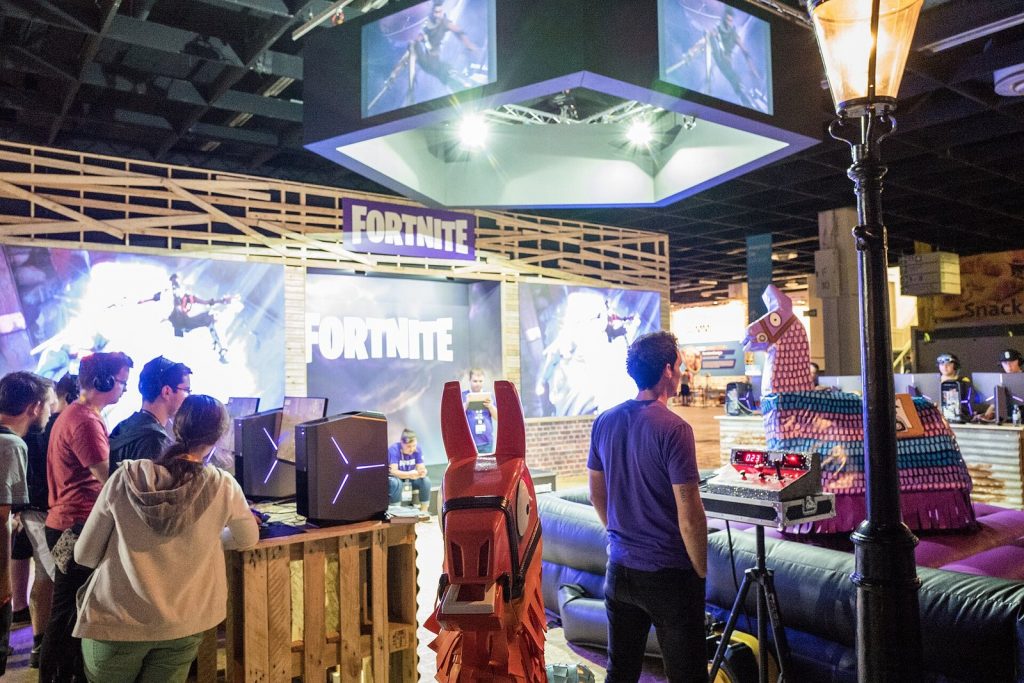
The free-to-play model and building mechanic set it apart. Up to 100 players jumped from the Battle Bus, harvested materials with their pickaxes and built walls, ramps and floors in the middle of gunfights. Our Fortnite building guide explains how those mechanics work. Growth was immediate: Wikipedia records more than 10 million players within two weeks of release. The wider story of how the genre reached that point is covered in our history of battle royale games.
2018: A Cultural Phenomenon
In 2018, Fortnite became something bigger than a game. Several moments stand out:
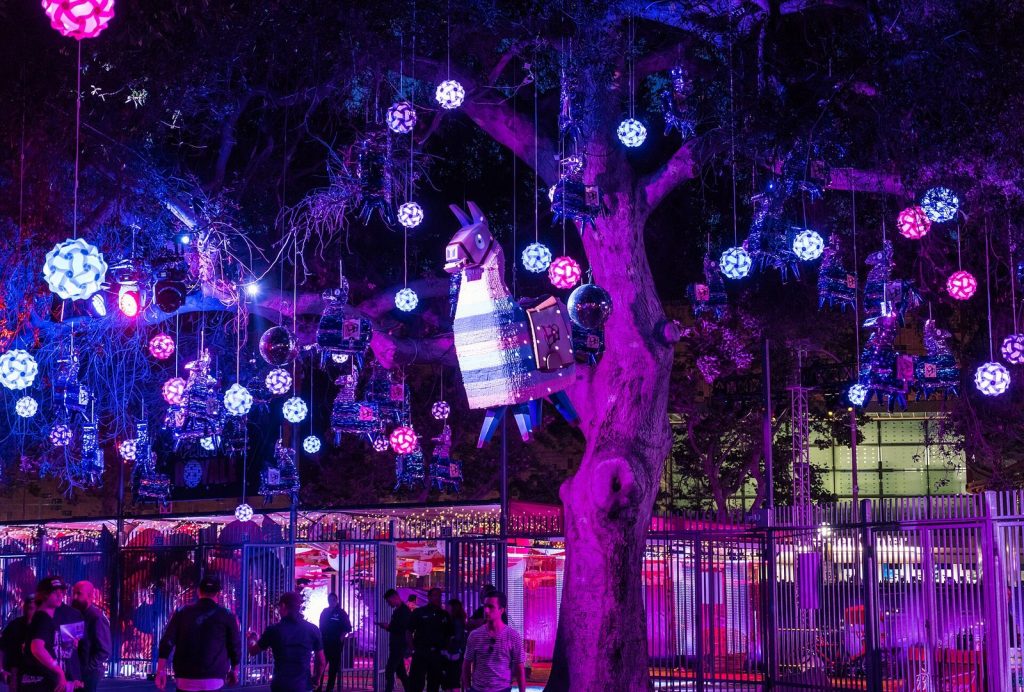
- March 2018: a Twitch stream featuring the streamer Ninja and the rapper Drake broke viewership records, bringing Fortnite into mainstream pop culture.
- 2 April 2018: Fortnite became available to everyone on iOS, followed by Nintendo Switch on 12 June 2018 and an Android beta in August.
- June 2018: Battle Royale reached 125 million players.
- June 2018: the first major live event, a countdown culminating in a rocket launch, showed how the game’s world could change in real time in front of players.
- 6 December 2018: Creative mode launched, giving players their own islands on which to build freely.
Wikipedia cites estimates that Fortnite earned around US$2.4 billion in 2018, and in July 2019 Epic hosted the Fortnite World Cup with a US$30 million prize pool.
Chapters, Seasons and Live Events
Fortnite’s content is organized into chapters, each containing several seasons that typically last about ten weeks. Each season brings changes to the map, items and story, along with a battle pass of cosmetic rewards. Chapters are bigger resets, usually with a completely new island.
The End (October 2019)
The most famous transition is the end of Chapter 1. On 13 October 2019, the final day of the tenth season, a live event called “The End” destroyed the island: a meteor set off a chain reaction and players were pulled into a black hole. The game then stayed offline, showing only the black hole, for more than 36 hours. Local news outlet WTOC reported that Fortnite returned around 4 a.m. Eastern on Tuesday, 15 October 2019, with a trailer and a new island for Chapter 2. Few games had ever taken themselves offline as a deliberate storytelling choice.
Concerts and crossovers
Live events became a signature. Marshmello’s in-game concert in February 2019 was reported to have been watched by more than 10 million players. In April 2020, Travis Scott’s in-game tour set a record of 12.3 million concurrent live viewers, according to reports cited by Wikipedia. Crossovers became constant too, beginning with an Avengers: Infinity War tie-in announced in May 2018 and continuing with films, comics, sports and music franchises ever since.
Legal Battles and Platform Changes
Fortnite’s success also brought conflict. In 2020, Epic introduced a direct payment option for V-Bucks that bypassed app store fees. On 13 August 2020, Apple and Google removed Fortnite’s mobile clients from their stores, starting a long legal fight. Wikipedia notes that a court ruling on 30 April 2025 limited Apple’s control over third-party storefronts, and Fortnite returned to US iPhones on 20 May 2025. In March 2026, Epic and Google announced a settlement reducing the Play Store’s revenue share.
Meanwhile, Save the World left early access on 29 June 2020 as a premium title, and in April 2026 Wikipedia reports that it became free-to-play on most console and PC versions.
Zero Build and Ranked
For years, building was both Fortnite’s identity and its biggest barrier for new players. In March 2022, a season removed building from Battle Royale entirely and added a new regenerating overshield. When building returned in early April 2022, Epic kept the no-building version as a permanent option: Zero Build. It gave players who did not want to master building a way to enjoy the game, and it remains one of the main ways people play.
Ranked play arrived in May 2023, covering both Build and Zero Build across team sizes.
From Game to Platform
The biggest shift in Fortnite’s recent history is its transformation into a platform.
UEFN
On 22 March 2023, Epic launched the Unreal Editor for Fortnite (UEFN), which lets creators build islands with professional-grade Unreal Engine tools and publish them inside Fortnite. Combined with Creative mode, it allowed the community to create entire games within Fortnite. In March 2024, Epic even announced plans for Battle Royale seasons to be built in UEFN from late 2025.
Fortnite as a hub of games
In October 2023, the Fortnite client was redesigned around “Fortnite Experiences”, making it easier to switch between modes. Then, in December 2023, three major new experiences arrived:
- LEGO Fortnite (7 December 2023), a survival crafting game made with LEGO;
- Rocket Racing, an arcade racing game;
- Fortnite Festival, a rhythm and music game.
Other modes followed. Fortnite OG brought back the original Chapter 1 island with rotating seasonal changes and became a permanent mode in December 2024. Reload offers smaller islands with 40-player matches and a limited weapon selection. Ballistic, a tactical first-person mode, entered early access in December 2024; Wikipedia notes that it was removed, along with Festival’s Battle Stage, on 16 April 2026.
Fortnite by the Numbers
| Date | Milestone |
|---|---|
| 25 July 2017 | Save the World enters paid early access |
| 26 September 2017 | Battle Royale released, free-to-play |
| October 2017 | More than 10 million Battle Royale players |
| June 2018 | 125 million players |
| March 2019 | 250 million players reported |
| May 2020 | 350 million registered players reported |
| End of 2020 | Total revenue above US$9 billion (Battle Royale article) |
| 22 March 2023 | UEFN launches |
| December 2023 | LEGO Fortnite, Rocket Racing and Festival launch |
Figures as reported in Wikipedia’s Fortnite and Fortnite Battle Royale articles; registered-player numbers count accounts, not active players.
What Other Games Took From Fortnite
Fortnite’s influence reaches well beyond its own player base. Several ideas it popularized have become standard across live-service games:
- The seasonal battle pass. A tiered track of cosmetic rewards, refreshed each season, became the default monetization model for free-to-play shooters, including the other big battle royales.
- The map as a storyline. Fortnite showed that a battle royale island could change over time, with destroyed landmarks, new areas and an ongoing plot told through the environment rather than cutscenes.
- One-time live events. The rocket launch, The End and the concerts proved that millions of players will log in at the same moment to watch something happen. Other games have since staged their own map-changing events.
- Crossovers as content. Licensed outfits from films, music and sport turned Fortnite into a shared space for pop culture, an approach many competitors adopted.
- Cross-platform play and progression. Playing with the same account and friends across consoles, PC and mobile became an expectation, not a bonus.
Not all of these ideas began with Fortnite, but its scale made them the norm.
Why Fortnite Kept Evolving
Several threads run through Fortnite’s history:
- Constant change. Seasons, chapters and live events mean the game never stays the same for long, which keeps players returning.
- Accessibility. Free-to-play, available on nearly every device and with a cartoon style that appeals to all ages.
- Building as identity, then as option. Building made Fortnite distinctive, and Zero Build made it welcoming.
- Creators. Creative and UEFN turned players into developers and made the game a platform rather than a single mode.
As of September 2026, Wikipedia describes Battle Royale as being in Chapter 7, Season 4, after more than 40 continuous seasons. Whatever comes next, the pattern is clear: Fortnite reinvents itself whenever its current form starts to feel familiar.