The History of Minecraft: From Cave Game to Best-Selling Game
How a one-man prototype called Cave Game became the best-selling video game ever: Alpha, Beta, 1.0, Microsoft, Bedrock and the game drop era.
Minecraft began as a hobby project by one programmer in Sweden and grew into the best-selling video game ever made. Its story is unusual: it was sold to players while it was still unfinished, it built a huge community years before its official release, and it has never stopped changing. This article traces that path, from the “Cave Game” prototype in 2009 to the year-numbered versions of 2026, with dates checked against Wikipedia and the Minecraft Wiki.
2009: Cave Game and the First Public Version
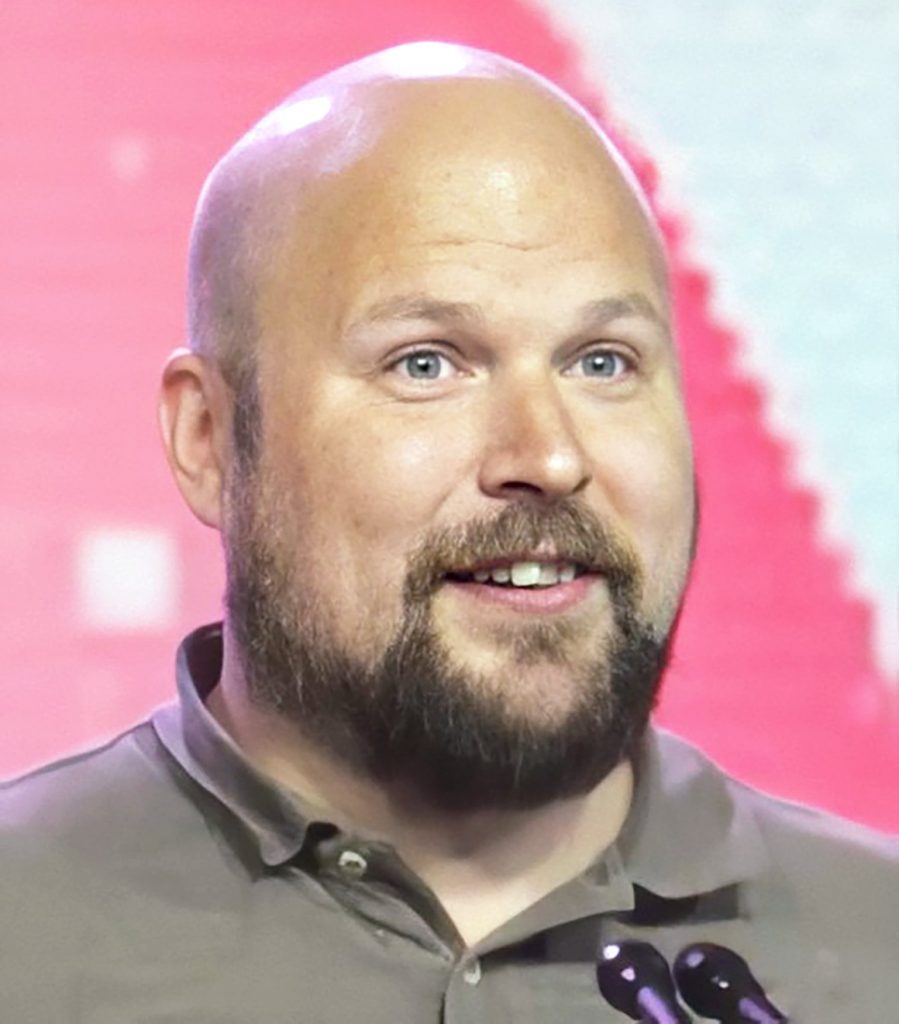
Minecraft was created by Markus Persson, known online as “Notch”. According to Wikipedia’s history of the game, the first known version was developed in May 2009 under the name Cave Game. Persson shared the first public version on 17 May 2009 on the TIGSource independent games forum.
That early build was tiny by today’s standards: a block world you could break and place. But the core idea was already there. The world was made of cubes, and every cube could be removed or placed again. Persson continued to work on it in public, posting updates and listening to the community that quickly formed around it.
Development went through a series of named phases:
- Classic – the earliest builds, focused on building.
- Indev (from 23 December 2009) – “in development”, with early survival features.
- Infdev (from 27 February 2010) – “infinite development”, the start of the infinite procedurally generated world.
- Alpha (from 30 June 2010) – which introduced redstone. Alpha v1.2.0 on 30 October 2010 added biomes and the Nether.
- Beta (from 20 December 2010).
Selling an Unfinished Game
One of the most important decisions in Minecraft’s history was commercial, not technical. Players could buy the game while it was still in Alpha, at a reduced price, and receive all future updates. This was an early and very successful example of what later became the standard “early access” model for survival and sandbox games.
The numbers grew fast. Wikipedia reports that Minecraft passed one million purchases less than a month after entering Beta in early 2011, and that before the full release the Beta had more than 16 million registered users and 4 million purchases. Those sales funded the creation of a company, Mojang, which allowed Persson to hire a team and work on the game full time.
Beta added many of the features that define Minecraft today. Beta 1.8, the “Adventure Update”, released on 14 September 2011, and it added Creative mode alongside other exploration-focused changes. By then, the game had a thriving ecosystem of fan-made servers, mods, videos and texture packs.
2011: Version 1.0 at MINECON
Minecraft officially released as version 1.0.0 on 18 November 2011. The Minecraft Wiki notes that the release took place during MINECON 2011, the first official Minecraft convention, after roughly two and a half years of development.
The 1.0 update was substantial. According to the Minecraft Wiki, it added:
- The End, a new dimension reached through an End portal;
- the Ender Dragon, the game’s first true final boss;
- enchanting, with enchanting tables and bookshelves that increase the maximum level;
- brewing and potions;
- Hardcore mode, which locks difficulty at Hard and deletes the world on death.
Shortly afterward, on 1 December 2011, Persson handed creative lead of the game to Jens “Jeb” Bergensten, who would become one of the faces of Minecraft development for years. If you want to see what that survival loop feels like today, our Minecraft beginner’s guide follows a new player through the first night.
Minecraft Spreads Beyond the PC
Minecraft quickly moved beyond Windows, macOS and Linux. Wikipedia’s timeline lists the key early ports:
- Pocket Edition launched as an early alpha on the Xperia Play in August 2011, then reached Android on 8 October 2011 and iOS on 17 November 2011.
- Xbox 360 Edition released on 9 May 2012.
- PlayStation 3 Edition followed in December 2013.
- PlayStation 4 and Xbox One editions arrived in September 2014.
Each of these versions was developed separately, which meant features did not always match across platforms and players on different devices could not play together. That fragmentation would take several more years to solve.
On the PC, sales kept climbing. Wikipedia records more than 5 million PC copies by March 2012 and 10 million by April 2013, with Pocket Edition reaching 10 million the following month. By 25 February 2014, Minecraft had 100 million registered users across all platforms.
2014: Microsoft Buys Mojang
The biggest business event in Minecraft’s history came in 2014. On 15 September 2014, Microsoft announced that it would acquire Mojang and the Minecraft intellectual property for US$2.5 billion. Wikipedia lists the deal as completed on 6 November 2014. Persson left Mojang in 2014, and Wikipedia notes that a community backlash over the enforcement of server rules on donations contributed to his decision to sell.
Many fans worried that a large corporation would change the game’s character. In practice, Minecraft continued to be developed by Mojang, now known as Mojang Studios, and the Java Edition kept its modding community. Microsoft’s main contribution was scale: more platforms, more investment and, eventually, a single shared version for most devices.
Wikipedia also notes that Persson’s departure was followed by a pause in the regular rhythm of major updates, which resumed with version 1.9, the “Combat Update”, on 29 February 2016. That update changed melee combat, a change that still divides parts of the community.
2017: Bedrock and “Better Together”
Mobile and Windows 10 versions shared a codebase descended from Pocket Edition, written in C++. On 20 September 2017, the “Better Together” update merged the Windows 10, Xbox One and Pocket editions into what became known as Bedrock Edition, with crossplay between those platforms. A Nintendo Switch version, first released on 11 May 2017, joined that family as well.
The original PC game became known as Java Edition. The two editions are updated in parallel but still have many small differences in mechanics, mods, servers and redstone. The older standalone console versions received their final update on 18 December 2018. On 7 June 2022, Java and Bedrock were bundled together for purchase on Windows, though they remain separate games. We break down those differences in detail in our Java vs Bedrock comparison.
The Era of Big Named Updates
From the late 2010s, Mojang released roughly one large themed update per year. Each focused on a part of the world:
| Version | Name | Year | Focus |
|---|---|---|---|
| 1.13 | Update Aquatic | 2018 | Oceans and underwater life |
| 1.14 | Village & Pillage | 2019 | Villages, villagers and raids |
| 1.16 | Nether Update | 2020 | New Nether biomes and mobs |
| 1.17 / 1.18 | Caves & Cliffs Parts I and II | 2021 | Caves, mountains and world height |
| 1.19 | The Wild Update | 2022 | Deep dark, swamps and new mobs |
| 1.20 | Trails & Tales | 7 June 2023 | Archaeology, storytelling, decoration |
Dates and names as listed in Wikipedia’s history of Minecraft.
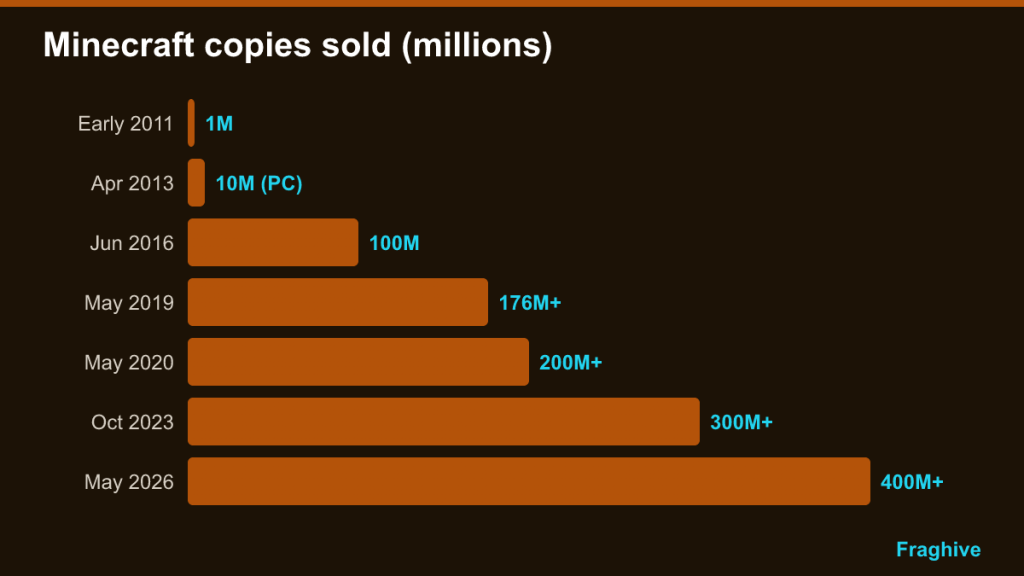
During this era, Minecraft also became the best-selling video game of all time. Wikipedia notes that it passed 176 million copies around its tenth anniversary in May 2019, then 200 million by May 2020 and more than 300 million, a figure reported in October 2023.
Game Drops and Year-Based Versions
In September 2023, Mojang announced a change in how it would deliver content: instead of one major update per year, it would release smaller, more frequent game drops. In 2024, that meant 1.21 (“Tricky Trials”) followed by additional drops numbered 1.21.2 and 1.21.4. The idea was to deliver new features to players more steadily, rather than asking them to wait a full year.
The version numbers then changed too. In December 2025, Mojang announced year-based version numbering starting in 2026, so the first Java release of the year was numbered 26.1. Version numbers that once looked like 1.21.x now tell you the year a release came out.
Platform growth continued during this period as well. Wikipedia lists a native PlayStation 5 version of Bedrock on 22 October 2024 and a graphics upgrade called Vibrant Visuals, which shipped on Bedrock in June 2025. Minecraft also reached cinemas: A Minecraft Movie was released in 2025.
Sales Milestones at a Glance
| Date | Milestone (as reported on Wikipedia) |
|---|---|
| Early 2011 | 1 million purchases, under a month into Beta |
| April 2013 | 10 million PC copies |
| June 2016 | 100 million copies across platforms |
| May 2019 | More than 176 million; best-selling game of all time |
| May 2020 | More than 200 million |
| October 2023 | More than 300 million |
| May 2026 | More than 400 million |
Why Minecraft Lasted
Plenty of hit games fade after a few years. Several factors help explain why Minecraft did not:
- It is a toolbox, not a story. Survival, Creative, Hardcore, servers, minigames and adventure maps all use the same blocks, so the game can be whatever players want.
- Community creation. Mods on Java, add-ons and the Marketplace on Bedrock, and countless servers and maps keep the game fresh even between official updates.
- Free updates. Since the beginning, buyers have received new content without paying for new versions of the game.
- Accessibility. Simple visuals mean it runs on a huge range of hardware, and it is approachable for children while still offering depth through redstone, farming and large builds.
- Video and streaming culture. Minecraft became one of the defining games of online video, which kept bringing in new generations of players.
Its early-access sales model and survival mode also influenced an entire genre. Many later survival crafting games, from Rust to Valheim, owe something to the idea that players will happily buy, play and help shape a world that is still under construction.