What Is a Survival Crafting Game? The Genre Explained
Gather, craft, build, survive: how survival crafting games work, and how Minecraft, Rust, Valheim and ARK differ on PvP, progression and early access.
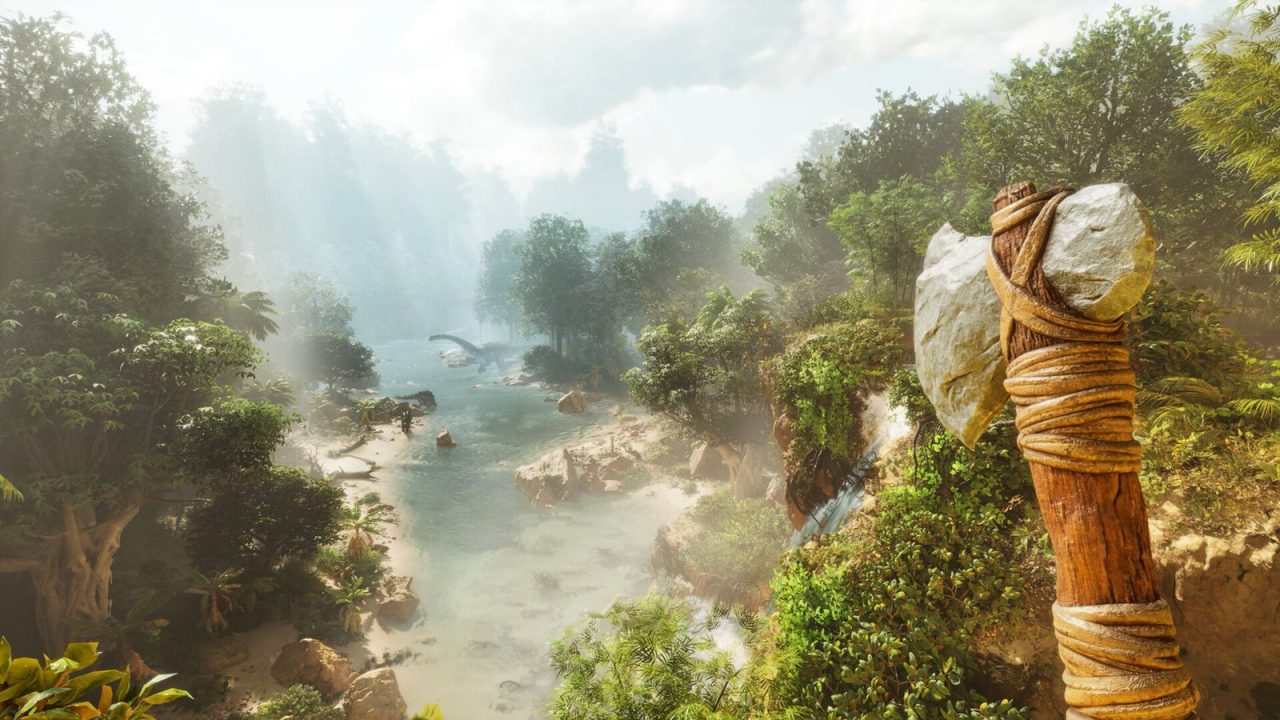
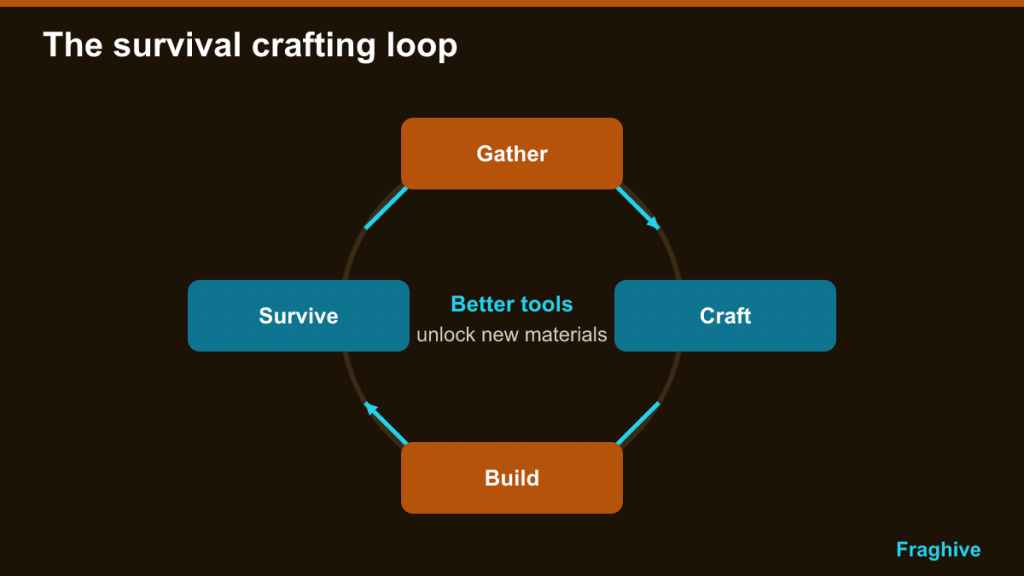
You wake up somewhere unfamiliar with nothing in your hands. You pick up sticks and stones, make a crude tool, use it to gather better materials, and by nightfall you have a shelter. A week later you have a fortified base, a farm and gear made from materials you could not even reach on day one. That arc, from empty-handed to self-sufficient, is the heart of the survival crafting genre. This guide explains its core loop, the systems most games share, and how four of the best-known examples (Minecraft, Rust, Valheim and ARK) take the same foundation in very different directions.
A working definition
Survival games, as Wikipedia describes them, are set in hostile, often open-world environments where players start with minimal equipment and must last as long as possible. Survival crafting games put particular weight on two activities: gathering raw resources from the world and crafting them into tools, equipment and buildings. Most also ask you to manage basic needs, such as hunger, thirst or temperature, and to protect yourself from threats that might be environmental, monstrous or other players.
What separates the genre from a typical action or role-playing game is that progress is largely self-directed and material. You are not mainly gaining power through story missions or character levels. You are gaining it by building better things out of the world around you.
The core loop: gather, craft, build, survive
Gathering
Everything begins with resources: wood from trees, stone from rocks, fiber from plants, meat and hide from animals. Early gathering is often done by hand or with a primitive tool, and it is deliberately slow.
Crafting
Crafting turns those resources into useful items. The first recipes are simple, such as a stone axe or a basic pickaxe, and each one speeds up gathering. A common design pattern, which Wikipedia uses as an example, is that better tools can harvest materials weaker tools cannot: a stone pickaxe mines ores that a wooden one cannot. This creates a ladder of progression where each rung unlocks the next.
Building
Shelter turns a dangerous world into a manageable one. Building systems range from Minecraft’s freeform blocks to piece-based systems of foundations, walls and roofs in Rust, Valheim and ARK. A base is where you store items, craft at workstations, respawn after death and defend against threats.
Surviving
Survival pressure gives the loop its tension. You might need to eat, drink, stay warm, avoid monsters at night, or defend your base from raiders. These pressures force you to keep gathering and improving rather than standing still.
Managing needs: hunger, thirst and temperature
Needs systems are one of the most varied parts of the genre:
- Hunger is nearly universal. In Minecraft, a full hunger bar lets your health regenerate, while an empty one makes you lose health. In Valheim, food raises your maximum health and stamina rather than acting as a countdown to starvation.
- Thirst appears in harsher games. Rust and ARK both track water; Minecraft and Valheim do not.
- Temperature adds environmental danger. Rust players can suffer hypothermia, ARK has fortitude and insulation, and Valheim’s Mountains and Deep North punish players without the right gear.
- Other meters appear in some games. Don’t Starve, for example, tracks sanity alongside hunger.
The more needs a game tracks, the more “survival” it feels. Games that keep needs light tend to emphasize creativity and exploration instead.
Sandbox freedom vs progression gates
A key distinction is how much the game tells you what to do next.
- Open sandbox. Minecraft has a final boss in the Ender Dragon, but most players set their own goals: build a castle, automate a farm, explore. You can ignore the “ending” entirely.
- Boss-gated progression. Valheim structures its world around bosses. Each defeated boss drops an item that unlocks the next tier of materials, and each biome is tuned for a specific stage.
- Tech trees and unlocks. ARK uses engrams, recipes unlocked with points earned by leveling up. Rust uses blueprints that you research or learn, which may be reset when a server wipes.
Sandbox games give more freedom but less direction. Gated games give clear goals but can feel restrictive if you want to explore off the intended path.
PvE vs PvP: who is the threat?
Wikipedia’s overview notes that many survival games run on persistent servers, where play without opposing players is called player versus environment (PvE) and play with them is player versus player (PvP). That choice shapes everything:
| Game | Main focus | Typical multiplayer |
|---|---|---|
| Minecraft | PvE and creativity | Solo, co-op, Realms and community servers with many rule sets |
| Rust | PvP | Large servers where raiding other players is central |
| Valheim | Co-op PvE | Up to 10 players per world; PvP optional |
| ARK | Both | Official and unofficial servers, PvE and PvP, plus single player |
In PvE, the challenge comes from the world: monsters, weather, bosses. In PvP, other players are the most dangerous creatures in the game. They can raid your base, steal your gear and undo days of work. Players often form alliances (clans or tribes) and build fortified structures to defend against both the environment and other players.
How the four big examples compare
Minecraft
Minecraft’s first public alpha arrived on May 17, 2009, with a full release on November 18, 2011. It is widely considered the game that popularized survival crafting for a mainstream audience. Its Survival mode has light needs (a hunger bar, monsters at night) and a huge emphasis on creativity. Our Minecraft first-night guide walks through its loop.
Rust
Facepunch’s Rust entered early access in December 2013 and fully released on February 8, 2018. It is the PvP-heavy end of the spectrum: you start with a rock and a torch, other players are a constant threat, and servers reset regularly through wipes. See our Rust beginner’s guide for how a session begins.
Valheim
Iron Gate’s Valheim launched in early access on February 2, 2021, and reached 1.0 on September 9, 2026. It is co-op focused and boss-gated, with a food system that rewards preparation over constant grinding.
ARK
ARK: Survival Evolved entered early access in June 2015 and fully released in August 2017; the Unreal Engine 5 remaster, ARK: Survival Ascended, entered early access in October 2023. Its standout system is taming: knocking out or befriending dinosaurs and other creatures and using them for transport, combat and gathering.
The role of early access
No genre is more closely linked to early access than survival crafting. Minecraft was playable and selling years before its 1.0 release. Rust spent more than four years in early access, ARK more than two, and Valheim more than five. Why?
- Systemic games need testing at scale. Survival games are built from interacting systems: resources, crafting, needs, building, combat, servers. Thousands of players find balance issues and exploits faster than any internal team.
- Content can be added in layers. A survival world can launch with a few biomes or tech tiers and grow over time. Valheim added the Mistlands in December 2022 and the Ashlands in May 2024 before the Deep North arrived with 1.0.
- Small teams can fund development. Valheim was made by a five-person team, and early access sales funded years of further work.
Early access has a downside. Wikipedia notes that some critics argue the genre became saturated after 2012, with clones and titles released quickly into early access to make money. For players, the lesson is to judge an early access game by what it offers today, not by what it promises.
Where the genre came from
Survival elements go back decades, but a few milestones stand out. Wikipedia points to UnReal World (1992), a roguelike set in Iron Age Finland whose only goal is survival, and to Wurm Online, whose early development involved Markus Persson before he created Minecraft. Minecraft’s 2009 release brought survival crafting to millions, and the 2012 DayZ mod for Arma 2 showed how tense open-world survival could be with other players around. Many of the 2010s survival hits followed from those two very different templates: Minecraft’s creative crafting and DayZ’s player-driven danger. Market research firm SuperData estimated that survival games earned over $400 million in revenue in the first six months of 2017 alone.
Common terms you will hear
- Base: your home structure, where you store items and respawn.
- Tier: a level of materials or tools (for example, wood, stone, iron).
- Wipe: a server reset that clears bases and sometimes blueprints, common in Rust.
- Tame: a creature you have made into an ally, central to ARK.
- Biome: a region with its own terrain, resources and threats.
- Raid: attacking another player’s base to take their loot.
Is the genre for you?
Survival crafting games reward patience, planning and curiosity. If you enjoy watching something grow from nothing, whether a cabin, a castle or a fortified compound, the genre is likely to click. Choose based on the kind of pressure you want: creativity with light danger (Minecraft), cooperative adventure with structure (Valheim), creature collecting and large-scale building (ARK), or high-stakes competition with other players (Rust). And if you want a match-based kind of survival instead, the same “start with nothing” idea powers the battle royale genre, compressed into twenty-minute rounds.