What Is a Battle Royale Game? The Genre Explained
Large lobbies, a shrinking safe zone and one winner: a beginner-friendly breakdown of how battle royale games work, with Fortnite, Apex, Warzone and PUBG.

Drop onto a map with dozens of strangers, grab whatever you can find, and try to be the last one standing while the playable area closes in. That one-sentence pitch describes a genre that grew from a handful of fan-made mods into some of the most played games in the world. If you have heard friends talk about “the storm,” “the ring” or “the circle” and wondered what it all means, this guide explains the building blocks that almost every battle royale shares, and where the big four (Fortnite, Apex Legends, Call of Duty: Warzone and PUBG: Battlegrounds) take those blocks in different directions.
The core loop in one paragraph
A battle royale is an online multiplayer game that mixes last-player-standing combat with survival-style scavenging. Every match starts the same way: a large group of players enters a single map with little or no equipment. They choose where to land, search buildings and containers for weapons, armor and healing items, and fight anyone they meet. Over time a safe zone shrinks, and anyone caught outside it takes damage. The shrinking zone forces survivors into closer and closer quarters until only one player or one team remains. That team wins, and everyone else queues up for the next match.
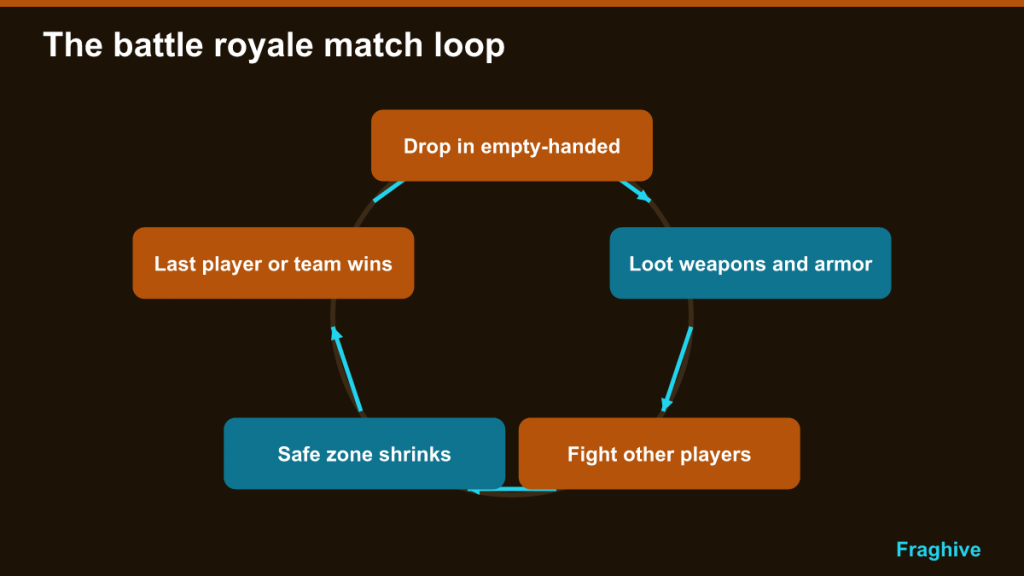
What makes the format compelling is that each match is a self-contained story. You do not carry weapons from one game to the next, so a newcomer and a veteran start every round with the same empty hands. Skill still matters enormously, but luck in the first few minutes (what you find, who lands near you) keeps every game different.
The building blocks every battle royale shares
A large lobby
Battle royales are defined partly by scale. Rather than two teams of five or six, a single match holds many players or many small teams at once. Typical sizes for the big four, according to the games’ official pages and long-standing documentation:
- Fortnite Battle Royale: up to 100 players per match, in solo, duos, trios or squads of four.
- PUBG: Battlegrounds: up to 100 players, in solo, duos or squads of up to four.
- Apex Legends: EA describes its core mode as “classic 60-person Battle Royale,” usually twenty squads of three.
- Call of Duty: Warzone: the original 2020 release supported up to 150 players in one match; lobby sizes have varied by map and mode since.
Limited-time and alternate modes often change these numbers, so treat them as the standard rather than a fixed rule.
The drop
Most battle royales begin with players leaving a vehicle in flight and skydiving or parachuting to the ground. Fortnite uses the flying Battle Bus, PUBG uses a plane whose flight path changes every round, and Apex Legends launches squads from a dropship with one player acting as “jumpmaster” who steers the team’s landing. The drop is your first real decision: land somewhere busy for fast loot and fast fights, or somewhere quiet to gear up safely.
Scavenging for gear
Weapons, ammunition, armor and consumables are scattered around the map, often inside buildings or in supply containers. You can also take gear from players you eliminate. Many games color-code items by rarity so you can judge their value at a glance. In Fortnite, weapons range from Common through Uncommon, Rare, Epic and Legendary, with special Mythic and Exotic items above that, and higher rarities generally hit harder.
The shrinking safe zone
The zone is the engine of the genre. Each game calls it something different (the storm in Fortnite, the ring in Apex, the circle or gas in Warzone, the Blue Zone in PUBG), but the idea is identical. A safe area is marked on the map; after a countdown, the edge closes in toward a new, smaller area. Standing outside it drains your health, and later phases usually hurt more. Without this mechanic, players could hide forever. With it, every match has a natural pace that builds toward a tense final fight.
Elimination and second chances
Classic battle royale design gives each player one life. In team modes, though, most games add a “downed” or “knocked” state: when your health hits zero you collapse instead of dying, and a teammate can revive you if they reach you in time. Beyond that, each game has its own comeback system, which we cover below.
How the big four put their own spin on it
| Game | Standard lobby | Signature twist | Name for the zone |
|---|---|---|---|
| Fortnite | Up to 100 players | Building structures from harvested materials (or Zero Build without it) | The storm |
| Apex Legends | 60 players (20 trios) | Hero-style Legends with unique abilities; respawn beacons | The ring |
| Call of Duty: Warzone | Up to 150 at its 2020 launch | Cash economy, Buy Stations and the Gulag | The circle / gas |
| PUBG: Battlegrounds | Up to 100 players | Realistic ballistics, vehicles, large maps | The Blue Zone |
Fortnite: build to survive (or don’t)
Fortnite’s defining feature is construction. By breaking objects with a pickaxe you collect wood, stone and metal, which you can turn into walls, floors, ramps and roofs in seconds. Skilled players build entire forts mid-fight. Epic added Zero Build in 2022 as a separate option that removes building and adds a regenerating overshield, which makes the game feel closer to a traditional shooter.
Apex Legends: abilities and teamwork
Respawn Entertainment’s game gives every character, called a Legend, a set of abilities: scanning for enemies, deploying cover, healing allies, and so on. Squads are small and coordination matters, which is why Apex is known for its contextual ping system that lets players mark enemies and items without voice chat. If a teammate is eliminated, you can pick up their banner and bring it to a respawn beacon to bring them back.
Call of Duty: Warzone: money talks
Warzone layers an economy on top of the usual loop. You collect Cash from the map and from tasks called contracts, then spend it at Buy Stations on equipment or to bring fallen teammates back. Players eliminated for the first time are sent to the Gulag, a small arena where winning a duel earns a return to the match. Its Resurgence mode goes further, automatically respawning players as long as a teammate stays alive.
PUBG: Battlegrounds: the grounded original
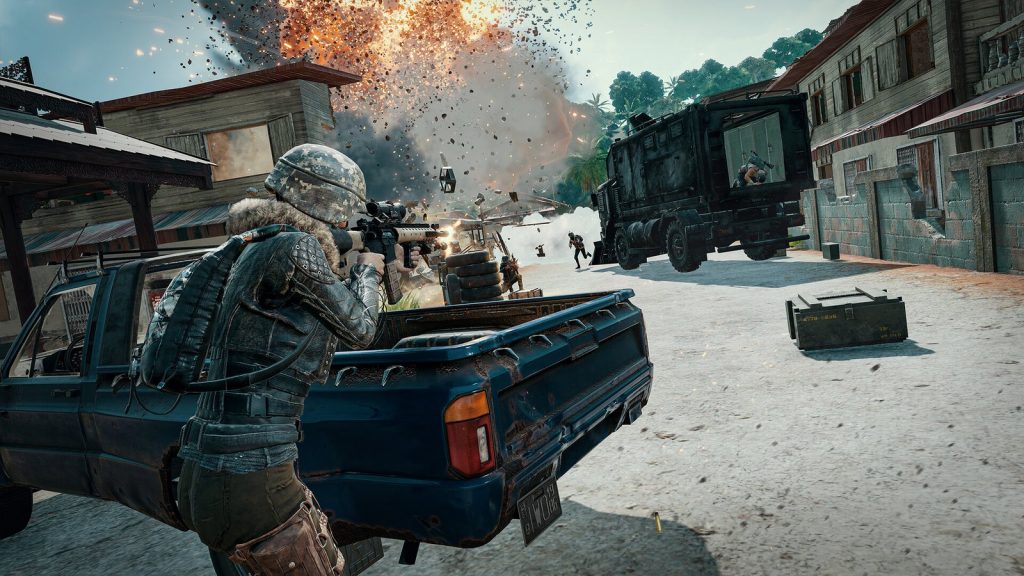
PUBG popularized the modern genre and still leans toward realism. Bullets drop over distance, recoil must be controlled, and maps are large enough that vehicles are often essential. Random Red Zones bombard parts of the map, and care packages dropped from planes contain gear you rarely find elsewhere.
Squads, solos and why team size matters
Most battle royales let you play alone or in a team. Solo matches reward caution and decision-making, since nobody can revive you and every fight is a risk. Team modes reward communication: one player scouts, another carries healing, and everyone shares information about enemy positions. Many players start in squads because teammates can pick them up after mistakes, and you learn faster by watching how others rotate and fight.
You can usually choose between playing with friends (a premade group) and letting matchmaking “fill” your team with strangers. Filling is a perfectly good way to learn, especially in games like Apex where pings let you cooperate without talking.
Respawns and comeback mechanics
Pure “one life” rules are harsh for beginners, so modern battle royales add ways back into the match:
- Revives: a downed player can be picked up by a teammate before they bleed out or are finished off.
- Respawn beacons and banners (Apex): teammates collect a fallen player’s banner and take it to a beacon.
- Reboot systems (Fortnite): squadmates can bring back eliminated players at Reboot Vans placed around the island.
- The Gulag and buybacks (Warzone): win a duel to return, or let your squad buy you back at a Buy Station.
- Respawn-focused modes: Warzone’s Resurgence and similar modes in other games keep respawns active for much of the match.
These systems change the pace considerably. In a strict mode, playing safe is vital. In a respawn-heavy mode, aggressive play is less punishing, and matches feel more like a long running skirmish.
Common beginner mistakes
- Always landing in the busiest spot. Hot drops are exciting but you will lose many matches in the first minute. Mix in quieter landings to practice looting and rotating.
- Ignoring the zone. More beginners are eliminated by poor timing than by poor aim. Check the map often and start moving before the edge reaches you.
- Looting too long. A full inventory is useless if the zone catches you or a squad finds you standing in a doorway. Grab the essentials (a couple of weapons, ammo, armor, healing) and move.
- Healing in the open. Most healing items take a few seconds to use. Break line of sight first.
- Chasing every fight. Gunfire attracts other teams. Winning a fight and then getting “third-partied” by a fresh squad is one of the most common ways to lose.
Why the genre caught on
Battle royale games blend several appeals in a single match: the exploration and surprise of a survival game, the tension of a high-stakes shooter, and a clear goal that anyone can understand. The format also suits free-to-play distribution. Fortnite Battle Royale launched free in September 2017, Apex Legends arrived free in February 2019 and passed 50 million player accounts within a month, and Warzone launched free in March 2020. PUBG, which started as a paid early access game in March 2017, switched to free-to-play in January 2022. Lowering the cost of entry made it easy for whole friend groups to try a game together.
The genre also produces memorable stories. Because matches are unscripted, every win feels personal: the last-second heal, the lucky rifle in a shed, the final circle that closed right on top of your hiding spot.
Which one should you try first?
There is no single correct starting point, and all four are free to download as of 2026. Some quick pointers:
- If you like bright visuals and creative play, try Fortnite, and consider starting in Zero Build to learn the shooting before the building.
- If you enjoy fast movement and character abilities, Apex Legends rewards teamwork and is easy to play with strangers.
- If you already play Call of Duty, Warzone will feel familiar, and Resurgence modes are forgiving for learners.
- If you prefer slower, tactical and realistic shooting, PUBG: Battlegrounds is the closest to the genre’s roots.
Whichever you pick, focus on three things in your first few hours: land somewhere sensible, keep an eye on the zone, and stick with your team. The aim will come with practice.