Warzone Cash, Buy Stations and Loadout Drops Explained
How Warzone's economy works: earning Cash, what Buy Stations sell, when to grab a loadout drop and how contracts feed the whole system.
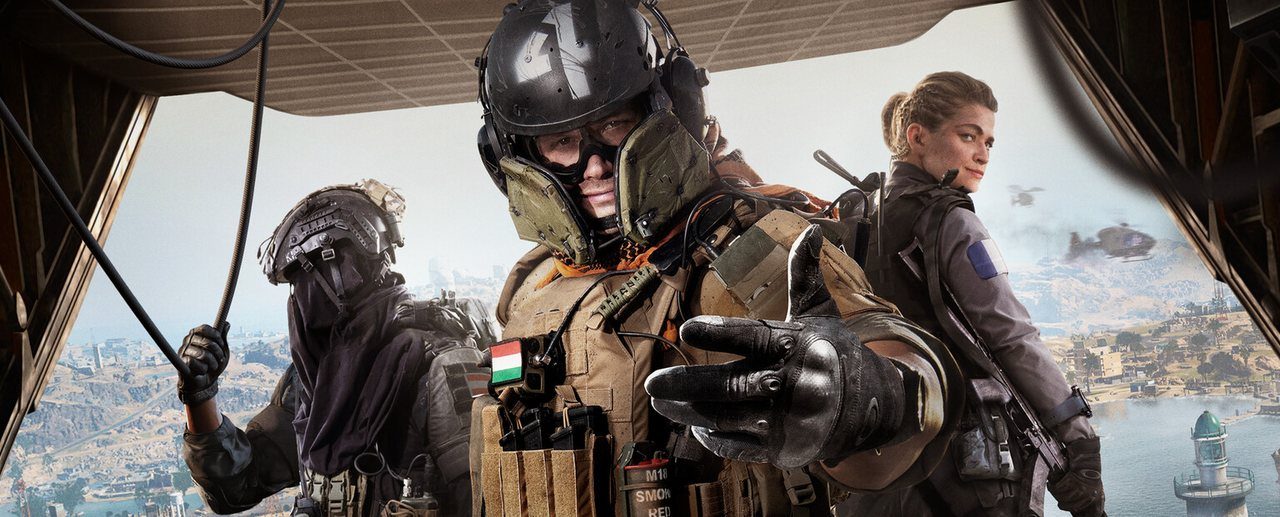
Most battle royales are decided by what you find on the floor. Call of Duty: Warzone added a second layer on top of that: an in-match economy. From the first version in March 2020, players have picked up Cash, spent it at Buy Stations and used it to call in a loadout drop with their own custom weapons. That economy is the reason Warzone matches feel different from PUBG or Apex Legends, and understanding it is one of the fastest ways to improve.
This guide explains each piece of the system and how they connect. Exact prices and stock lists have been changed many times across seasons, maps and the move from the original Warzone to the current version, so we describe how the system works rather than quoting a price list that may be out of date by the time you read this. Check the Buy Station menu in your own match for current numbers.
Why Warzone has an economy at all
When Warzone launched on March 10, 2020, Wikipedia’s summary of its design notes that Cash was a new currency that replaced the gadget-heavy approach of Black Ops 4’s Blackout mode. Instead of finding every useful tool lying around, players earn money and decide what to spend it on. That creates real decisions: do you buy a teammate back, or save for your loadout? Do you spend on a UAV now, or keep a cushion for the late game?
The economy also smooths out bad luck. A squad that lands in a poor-loot area can still recover by earning Cash and buying what it needs. That is a big difference from games where a bad landing means fighting with whatever spawned nearby. If you are brand new to the mode, our Warzone beginner’s guide covers the full match flow first.
How you earn Cash
Cash is match-only. Whatever you collect disappears when the game ends, so there is no reason to hoard it for later sessions. The main sources are:
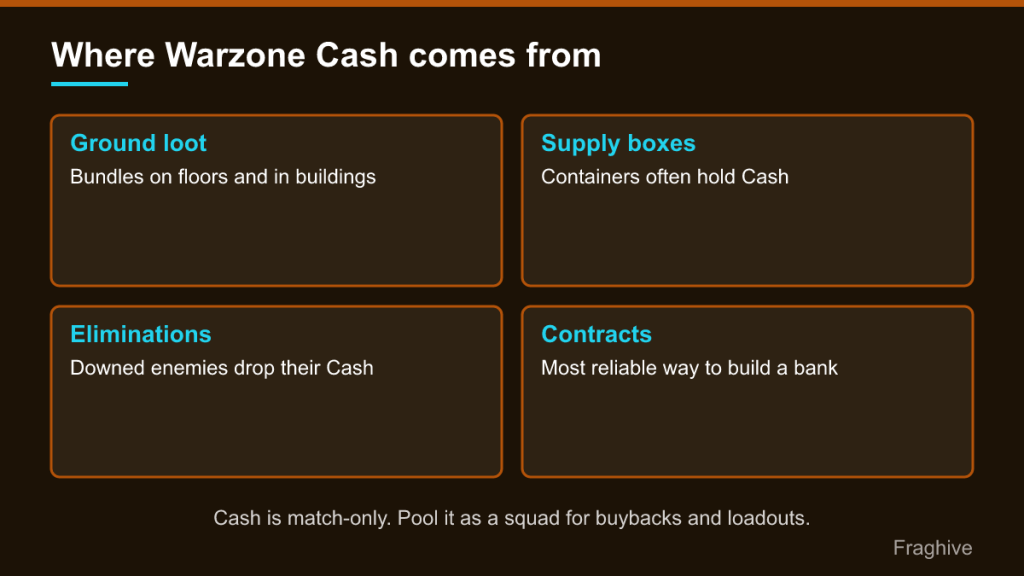
- Ground loot. Bundles of Cash spawn on the floor and in buildings, often alongside weapons and plates.
- Supply boxes. Opening containers frequently yields Cash along with equipment.
- Eliminated players. When an enemy goes down, the Cash they were carrying drops with their loot. Fights are therefore a way to transfer money from another squad to yours.
- Contracts. Optional missions picked up on the map pay out Cash and loot when completed. They are the most reliable way to build a bank quickly, and they are covered in detail below.
Cash can be dropped for teammates from your inventory. That matters because many purchases are expensive relative to what one player usually carries. A squad that pools money toward a single big purchase (a buyback or a loadout) will get it sooner than three players each sitting on a partial amount.
Contracts: the engine of the economy
Contracts are tablets placed around the map. Picking one up gives your squad a short objective and a timer. Activision’s own guide to Warzone contracts, published in 2020 for the original game, describes how each completed contract raised a squad’s “Contract Bonus,” which reset each match and increased the Cash and loot later contracts paid. The core contract types it described have appeared in many seasons since:
- Bounty. Your team is assigned a target in an enemy squad. The map shows only an approximate area that updates as they move. Killing the target pays Cash and removes a threat. Activision’s advice was to take Bounties often, simply because they tell you where an enemy is.
- Scavenger. Open a series of special supply boxes revealed one at a time. Finishing all of them gives the best rewards, which in the 2020 version could include high-rarity weapons and self-revive kits. It is a low-risk way to gear up early or after returning from the Gulag.
- Recon. Capture a comms station by standing near it. The reward includes loot and an early look at where the next safe zone will be. The drawback: capturing fires a flare that tells nearby squads someone is there.
- Most Wanted. Your position is revealed to everyone on the map, and you must survive for a set time. Success paid a large Cash reward and automatically redeployed eliminated squadmates in the version Activision described.
- Supply Run. Reach a marked Buy Station within a tight time limit (two minutes in the 2020 version) to unlock a one-time discount there. Activision noted the discount did not apply to the loadout drop.
Contract lists rotate. Some seasons add new types or remove old ones, so always read the description on the tablet. The general rule holds, though: contracts convert time and risk into Cash, and Cash converts into the things that win games.
What Buy Stations sell
Buy Stations are kiosks marked on the tactical map. Walk up, open the menu and spend Cash. The exact inventory changes between seasons, but across Warzone’s history the stock has tended to fall into a few groups:
| Category | Typical items | Why you buy it |
|---|---|---|
| Team recovery | Buy Back (redeploy a teammate) | Restores a full squad after a loss |
| Loadout | Loadout drop marker | Delivers your custom weapons and perks |
| Survival | Armor plates, self-revive kit, gas mask | Keeps you alive in fights and in the gas |
| Information | UAV-style scans | Reveals enemy positions nearby |
| Offense | Killstreak or scorestreak items such as airstrikes | Breaks up campers and forces movement |
Some seasons have also added rotating “specials” or limited-stock items. Map events have occasionally changed the rules too: the 2022 version of Warzone listed a “Fire Sale” public event among the events that could occur in a match, temporarily changing Buy Station prices.
A few practical habits apply whatever the current stock is:
- Know where the nearest Buy Station is before a fight, not after. When a teammate goes down for good, the clock starts on how fast you can bring them back.
- Do not loiter. Buy Stations are obvious meeting points. Experienced squads watch them, especially late in the match.
- Buy plates before fancy items. A UAV is useful, but a full set of plates wins more fights. Our explainer on the Gulag and redeploy systems covers what happens when you lose those fights anyway.
Loadout drops explained
A loadout is the custom class you build outside the match: primary and secondary weapons with your chosen attachments, perks, lethal and tactical equipment. Inside a Warzone match, you get it through a loadout drop, a crate that falls from the sky and lets each player who opens it equip one of their saved loadouts.
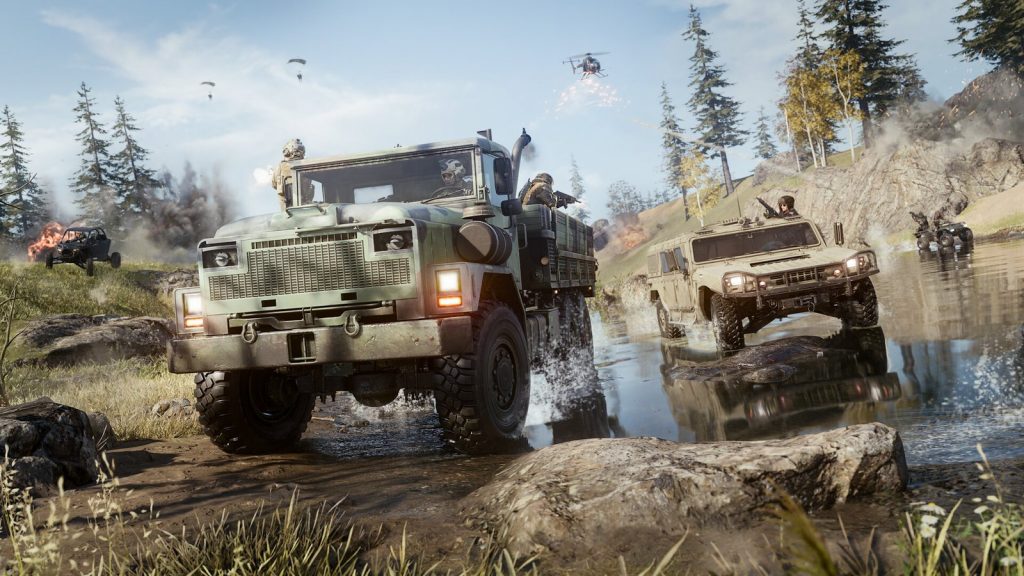
There are two broad ways a loadout drop arrives:
- Purchased. You buy a loadout drop marker at a Buy Station and throw it like a smoke grenade where you want the crate to land.
- Free or scheduled drops. Many versions and modes have dropped loadout crates around the map, or to each squad, after a set time in the match. Wikipedia’s description of the original game notes that loadout drops could spawn on the map after several minutes as well as being bought.
Prices have been adjusted repeatedly. Sometimes the cost was raised to make the loadout a mid-game milestone; at other times it was lowered so that everyone gets their weapons quickly. The marker has also been excluded from Supply Run discounts, as Activision’s contract guide noted. Do not rely on any number you saw in an old video; check the menu.
Why the loadout matters so much
Ground weapons are usually limited to whatever attachments they spawned with. Your loadout gives you weapons you have tuned and practiced with, plus perks that change how you play: staying off enemy radar, carrying extra equipment, or seeing more information. The difference is large enough that the first big objective of most squads is simply “get loadouts.”
When to grab your loadout drop
Timing a loadout drop is a tactical decision. The crate is visible and often marked with smoke, so other squads may come to contest it. Some guidelines:
- Drop it in cover. Throw the marker inside a courtyard, behind a building or on a rooftop rather than in an open field.
- Make sure everyone is ready. All squadmates should be nearby and alive before you call it, unless your squad has agreed one player will collect first.
- Plate before opening. If a squad is already rotating toward your smoke, you want full armor when they arrive.
- Do not open it while being shot at. Swapping weapons in a menu during a fight is a common way to lose.
- Consider the circle. Calling a drop at the edge of the next zone lets you equip and rotate in one step. Calling it deep outside the zone can leave you racing the gas. Our zone rotation guide explains how to plan those moves.
A useful mindset: the loadout drop is a moment of vulnerability, not a reward to celebrate. Equip, check your gear and move.
Budgeting as a squad
The best Warzone squads treat Cash as a shared budget with priorities. A simple order that works in most situations:
- Buybacks first. A full squad is worth more than any item. If a teammate is out, everything else waits.
- Loadouts second. Get them once the team is complete and the area is reasonably safe.
- Plates and self-revives third. These win individual fights.
- Information and offense last. UAVs and strike items are force multipliers for an already well-equipped squad.
It also helps to keep a reserve. A squad that spends everything immediately after getting loadouts may find itself unable to buy back a player who dies in the next fight. Some teams nominate a “banker” who holds the reserve and avoids the riskiest pushes.
Common economy mistakes
- Ignoring contracts. Running around looting buildings is slower than finishing a Scavenger or Bounty contract. Contracts are where most Cash comes from.
- Taking every Recon blindly. The circle information is valuable, but the flare announces you. Clear the area first.
- Splitting money evenly. Three players with partial amounts cannot buy anything big. Drop Cash to the player closest to the purchase.
- Forgetting gas masks. Late circles can force you into the gas. A mask buys seconds that matter.
- Calling a loadout and then looting. Equip, then leave. Lingering near smoke is how squads get third-partied.
How the economy shapes a match
Put the pieces together and a typical Warzone match follows a rhythm: land, loot and grab a contract; build Cash; secure loadouts; rotate with the circle while topping up plates; and keep enough money to recover from losses. The squads that lose most often are not always the worst shooters. Frequently they are the ones that never got loadouts, could not afford a buyback, or opened a crate in the open.
The details will keep changing. Prices move, contracts rotate and modes add their own twists. But the question at the heart of the system has stayed the same since 2020: what is the best use of this money right now? Answer that well and you will win more fights before they even start.