Call of Duty: Warzone for Beginners: How the Mode Works
How Warzone works for new players: the infil, Cash and contracts, Buy Stations, loadout drops, armor plates, the Gulag and how Resurgence differs.
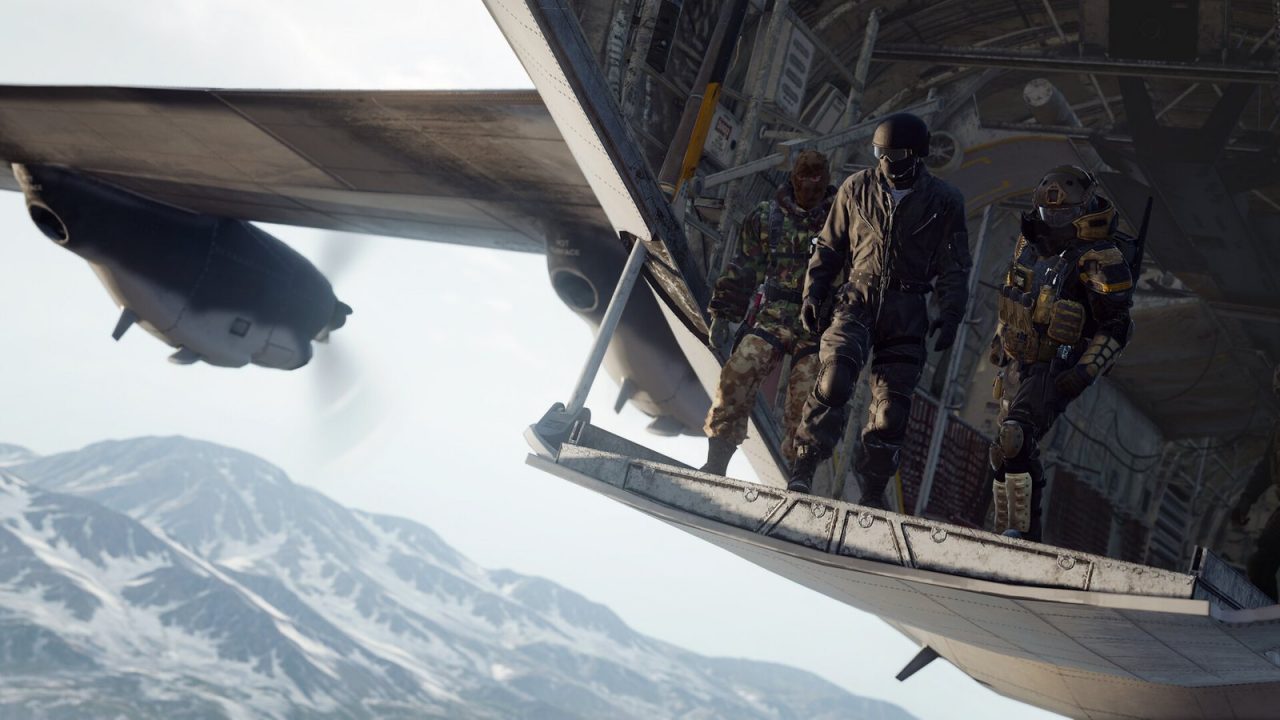
Call of Duty: Warzone took the familiar Call of Duty gunplay and dropped it into a large battle royale map with an economy, a second-chance arena and plenty of ways to bring teammates back. It launched free to play on March 10, 2020, and its developers say it was downloaded more than 50 million times in its first month. Since then the game has been rebuilt, rebranded and tied to each new yearly Call of Duty release, and maps have come and gone. Rather than chase the current season, this guide explains the systems that have defined Warzone across its versions, with dates where things have changed, so you can make sense of your first matches.
A quick note on versions
There have been two distinct versions of Warzone. The original (2020) launched on the Verdansk map, later moved to Caldera, and had its servers shut down on September 21, 2023. Its successor launched as “Warzone 2.0” on November 16, 2022, and is now simply called Call of Duty: Warzone. The current game is connected to the yearly premium releases: it has been part of Modern Warfare II (2022), Modern Warfare III (2023), Black Ops 6 (2024) and Black Ops 7 (2025), with progression shared between them.
Verdansk, the original map, returned to Warzone on April 3, 2025, as part of the game’s fifth anniversary. Map rotations and playlists change often, so check the in-game playlist for what is live when you play.
The infil: getting onto the map
Like other battle royales, a Warzone match starts with your squad flying over the map and parachuting down. Players can deploy their parachute and cut it to drop faster, which matters when several squads race to the same building.
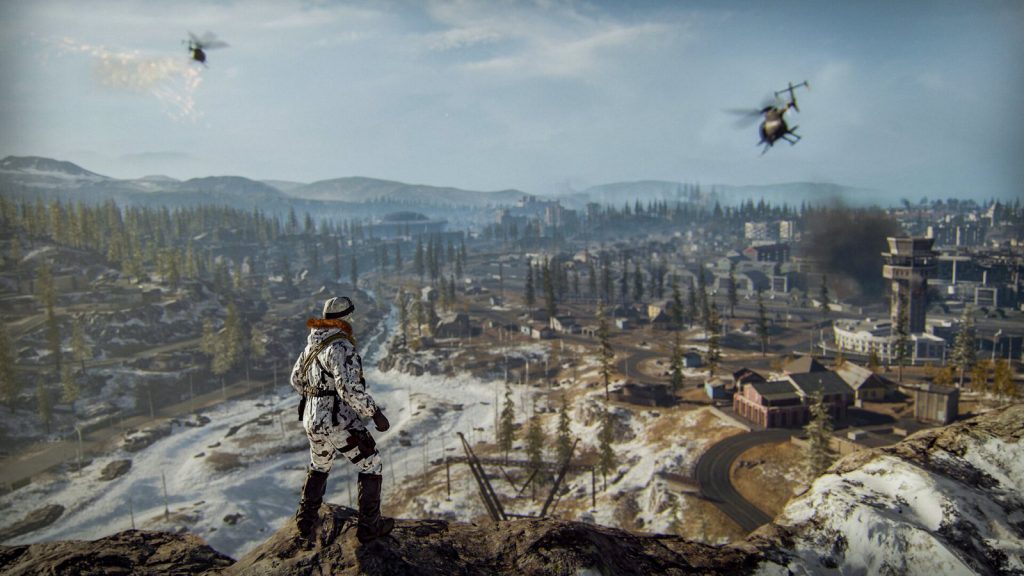
Landing decisions follow the same logic as any battle royale. Named locations and big buildings near the flight path are busy; outskirts are quieter. For learning, choose an area with a few buildings and a Buy Station nearby, because Buy Stations become important quickly.
Cash: Warzone’s in-game currency
The defining feature of Warzone is Cash. You collect it from stacks on the ground, from supply boxes, from eliminated players and from completing contracts. You spend it at Buy Stations. Cash is shared within a match only, so it resets every game.
Why it matters: Cash buys back eliminated teammates, purchases your custom loadout and pays for equipment such as self-revive kits and killstreak-style items. A squad that ignores Cash will usually find itself under-equipped in the late game.
Contracts: optional missions for rewards
Contracts are small objectives you can pick up from the map. Completing one rewards your squad, typically with Cash and loot. Over the years Warzone has used a variety of types, for example:
- Bounty-style contracts reveal the general location of an enemy player to hunt.
- Recon-style contracts send you to capture a location, often revealing information about where the next circle will close.
- Scavenger-style contracts send you to open a series of supply boxes.
Contract types rotate between seasons and maps, so read the description when you pick one up. As a beginner, scavenger-style contracts are a safe way to collect Cash and loot without picking a fight.
Buy Stations and loadout drops
Buy Stations are kiosks scattered around the map. They sell equipment and services for Cash. Depending on the season, the stock can include armor plates, self-revive kits, scorestreak-style items such as UAVs, gas masks, and the two most important purchases:
- Buy Back: bring an eliminated teammate back into the match.
- Loadout Drop: a crate containing your custom loadout, the weapons, perks and equipment you set up outside the match.
Your custom loadout is where your Call of Duty progression pays off. Ground weapons are fine for the opening minutes, but a loadout with your chosen weapons and perks is a large step up. Prices have been adjusted several times; when Verdansk returned in April 2025, for example, loadouts at Buy Stations were reduced to match the original 2020 price. Some modes also deliver free loadout drops a few minutes into the match. Whenever one is available, getting your loadout safely is a top priority.
A loadout drop lands with visible smoke, so other squads may come looking. Grab your kit quickly and move.
Health and armor plates
Warzone has a health pool and an armor layer made of armor plates. Plates absorb damage before your health does. You find them as loot and can buy them at Buy Stations. Inserting a plate takes a moment and is interrupted by sprinting or firing, so plate up behind cover.
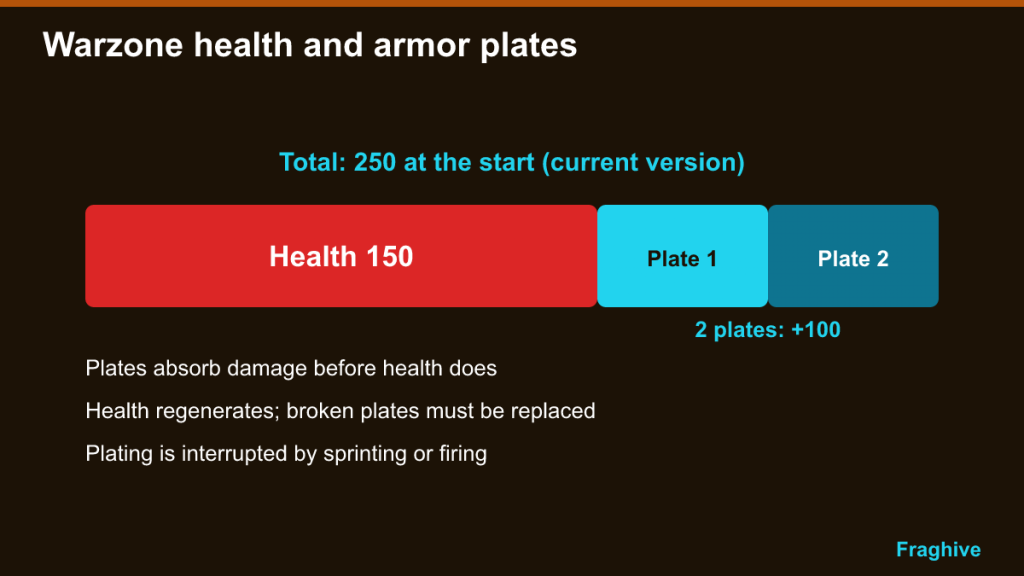
Exact numbers have changed between versions. In the current version of the game, players start with 150 health and two armor plates that add another 100. Health regenerates automatically after you avoid damage for a short time, but broken plates do not; you must replace them.
A good habit is to keep plating after every fight before you loot. A fully plated player with an average gun usually beats a half-plated player with a great one.
The Gulag and redeploying
The Gulag is Warzone’s most famous system. In the classic format, the first time you are eliminated you are sent to a small prison arena to fight another eliminated player in a one-on-one duel with the same weapons. Win, and you redeploy into the match. Lose, and your squad needs to buy you back.
The rules have not always been identical. Warzone 2.0 launched with 2v2 Gulag fights and an AI “Jailer” that players could hunt for a key; that format was reverted to 1v1 in a later 2023 season. When Verdansk returned in April 2025, the Gulag returned to the classic idea of one chance at a 1v1, after which your team must buy you back. Occasional public events have also released everyone held in the Gulag at once.
Practical tips:
- Learn the Gulag layout; it is small and fights are short.
- Do not panic if you lose. Your squad can still buy you back.
- Keep Cash in reserve as a team so a buyback is always possible.
We will cover the system in more depth in a dedicated explainer.
Resurgence: the respawn mode
Resurgence was added to Warzone in December 2020. It plays on smaller maps with faster pacing. The key difference: as long as at least one squadmate is alive, eliminated players respawn automatically after a timer, and there is no Gulag. In the current version, teammates can shorten that timer by completing contracts or getting eliminations. Respawns end at a certain point in the match as the circle closes, after which the final fights play out like a normal battle royale.
For beginners, Resurgence is a forgiving place to practice. You get far more fights per match, and an early mistake does not end your game.
| Feature | Battle Royale | Resurgence |
|---|---|---|
| Map size | Large | Smaller maps, faster rotations |
| Coming back | Gulag win or Buy Back | Automatic respawn while a teammate lives |
| Pace | Slower, more positioning | Constant fighting |
| Best for | Learning rotations and endgames | Practicing gunfights |
The circle: Warzone’s closing zone
Warzone’s safe area shrinks in stages, and anyone outside it takes damage from the gas. Gas masks let you survive in it for a short time. As in any battle royale, moving early to the next circle is usually safer than running ahead of the gas at the last moment. For more context on how the genre’s shrinking zones work, see our battle royale explainer.
Squad roles and teamwork
Warzone is usually played in squads, and simple roles help even with strangers:
- A banker. Somebody should keep an eye on the squad’s Cash and make sure a buyback or loadout is affordable. Cash can be dropped for teammates, so pool it when one player is close to a big purchase.
- A scout. One player with a longer-range weapon or a UAV-style item gathers information before the squad commits to a fight.
- A driver. On large maps, vehicles move squads between circles. Decide who drives and where everyone gets out before you set off.
Use the ping system to mark enemies, loot and destinations. A ping on an enemy position is often more useful than a long voice callout.
Common beginner mistakes
- Skipping the loadout. Ground weapons can win early fights, but your custom loadout is a major upgrade. Make getting it a priority.
- Plating in the open. Plating takes time. Get behind cover or into a building first.
- Spending every dollar. If your whole squad is broke when someone dies, there is nobody to buy them back.
- Running across open ground late. Late circles are full of players watching for movement. Rotate early, along buildings or ridgelines.
- Looting a fresh kill immediately. Other squads heard the fight. Reposition and plate before you loot.
A first-match plan
- Start in Resurgence to get comfortable with the guns and movement.
- Land near a Buy Station in a moderately busy area.
- Collect Cash and plates as you loot; grab a scavenger contract if one is nearby.
- Buy or collect your loadout as soon as it is available.
- Plate up after every fight, before looting.
- Keep enough Cash to buy back a teammate.
- Move to the next circle early and use buildings for cover.