Apex Legends for Beginners: Legends, Loot and Your First Matches
How Apex Legends works for new players: trios, the jumpmaster, picking a Legend, armor and attachments, knockdowns, banners and respawn beacons.
Apex Legends launched as a surprise free-to-play release from Respawn Entertainment and Electronic Arts on February 4, 2019, and it reached 50 million player accounts within its first month. Years later it remains one of the fastest, most team-focused battle royales around. It can also feel overwhelming at first: there are dozens of characters, a lot of loot types, and opponents who slide, climb and zip-line around the map at speed. This guide focuses on the systems that do not change from season to season, so you understand what is happening in your first matches regardless of the current balance or map rotation.
The basic format: trios and 60 players
EA describes the core mode as “classic 60-person Battle Royale,” usually split into twenty squads of three. Duos and other formats exist, but trios is the heart of the game, and the systems below were designed around three-player teams.
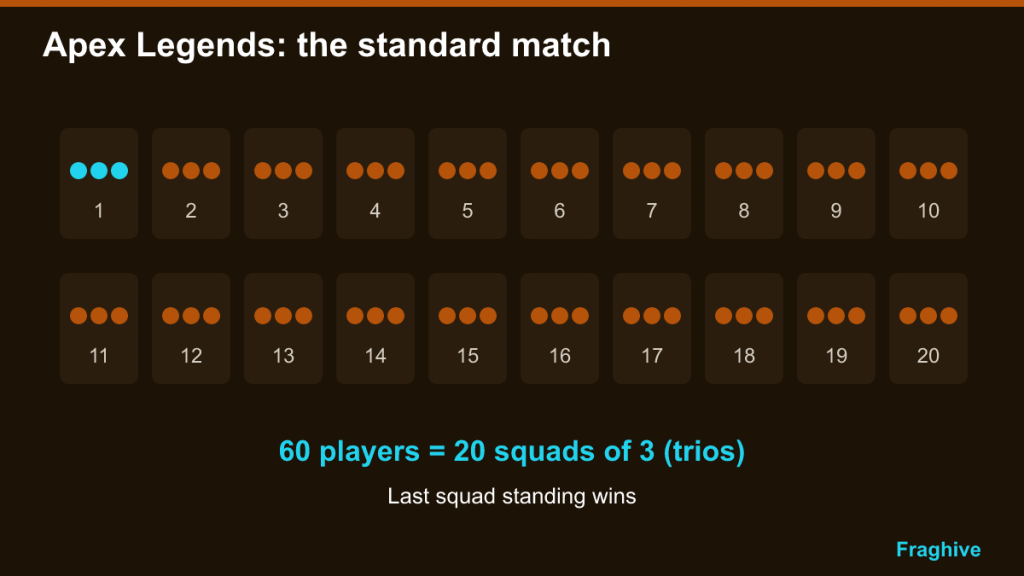
The flow of a match is familiar if you have read our battle royale explainer: drop onto the map, loot weapons and gear, fight other squads, and stay inside the ring as it shrinks. The last squad standing wins. What makes Apex different is how much it leans on character abilities and on coordination between three players.
The jumpmaster and the drop
At the start of each match, your squad rides a dropship across the map. One player is the jumpmaster, who decides when the squad jumps and steers everyone toward a landing spot. Other players can follow along or break off and fly solo, though leaving your team early is risky.
If you are given jumpmaster duty as a beginner, you can pass it to a teammate. If you keep it, look at the dropship’s route and pick a named area a little away from the path. Landing directly under the ship is the “hot drop” option: lots of fights, lots of early eliminations. For learning, a slightly quieter area is better.
Use the ping system before and during the drop. Pinging a location on the map tells your teammates where you want to land, and they can confirm or suggest an alternative without saying a word.
Choosing a beginner-friendly Legend
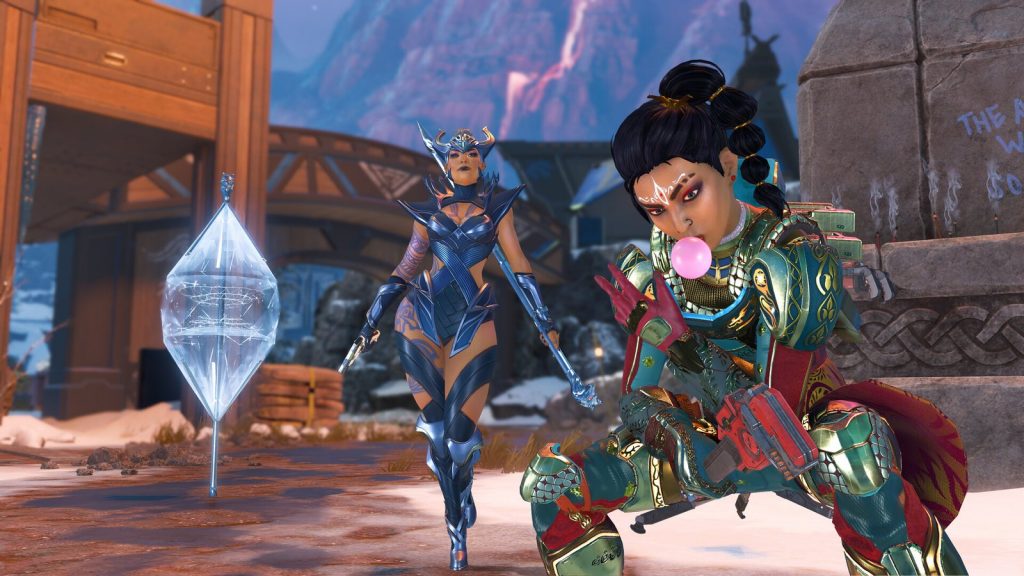
Every character in Apex is a Legend with a passive ability, a tactical ability on a short cooldown, and an ultimate ability on a longer cooldown. Since Season 16 (2023) Legends have also been grouped into five classes: Assault, Skirmisher, Recon, Controller and Support. Each class gets extra perks that help the team.
Instead of chasing whoever is strongest this season, pick a Legend whose kit is easy to understand and useful to your squad. Traits that help beginners:
- Abilities that keep you alive. Defensive cover, healing or a quick escape lets you survive the mistakes you will inevitably make.
- Abilities that give information. Recon Legends can scan for enemies, which helps you learn where fights come from.
- Simple timing. Abilities that work well whenever you press them are easier than ones that need precise setups.
Long-standing options often suggested for new players include Bangalore (smoke and a speed boost when shot at), Lifeline (healing support), Gibraltar (a protective dome) and Bloodhound (tracking and scanning). Balance changes every season, so play whoever feels comfortable rather than whoever topped a tier list.
A balanced squad
You do not need a perfect composition, but having at least one Legend who can scout or gather information and one who can protect or heal the team makes a big difference. If your teammates have already picked aggressive Legends, consider filling a support or recon role.
Loot: weapons, rarity and attachments
Weapons are found on the ground and in supply bins. Apex color-codes loot by rarity: white for common, blue for rare, purple for epic and gold for legendary. Higher rarity attachments and gear perform better.
Weapons and ammo
You can carry two weapons. Each uses a specific ammo type, and your inventory has limited space, so pick two weapons that cover different ranges (for example, one for close quarters and one for mid range) and carry enough ammo for both. A common beginner mistake is picking two guns that use the same ammo and then running out in a long fight, or picking two that use different ammo and filling the backpack with too much of one type.
Attachments
Attachments such as magazines, stocks, barrels and optics slot into weapons automatically when you pick them up. Extended magazines are especially valuable early because they increase how much you can shoot before reloading. Optics are personal preference; try several and stick with what you can track targets through.
Armor and shields
Your health bar sits beneath a shield bar provided by your body armor. Apex uses Evo armor, which levels up as you deal damage to enemies. EA has reworked how armor upgrades work several times, so the exact rules depend on the season, but the principle is consistent: fighting well makes your armor stronger, and higher armor levels give you more shield to absorb damage.
Healing items come in two families: those that restore health (syringes and med kits) and those that restore shields (shield cells and shield batteries). Phoenix kits restore both. All of them take time to use, so heal behind cover.
Knockdowns, banners and respawn beacons
Apex gives squads several chances to bring a teammate back:
- Knocked down. When your health hits zero you are knocked, not eliminated. You can crawl slowly, and a teammate can revive you by holding the interact button next to you. Enemies can finish you off, so teammates must decide quickly whether a revive is safe.
- Banner. If you are finished or bleed out, you leave behind a death box containing your loot and your banner card. A teammate has a limited amount of time to grab that banner.
- Respawn beacon. Carrying your banner to a respawn beacon on the map brings you back, dropped in from the sky. You return with almost no gear, so teammates should share spare weapons and healing.
Because of this system, playing for your team is literally how you stay in the game. Surviving alone as the last member of your squad is not a lost cause; if you can grab both banners and reach a beacon, your squad is back in action.
Pinging: the most useful habit to learn
The ping system lets you communicate without voice chat. A quick tap marks a location; tapping on an item tells teammates where loot is; double-tapping marks an enemy. Your Legend calls out what you have pinged, and teammates can respond to requests. If you play with strangers, pinging is how you coordinate. Learn to ping enemies the moment you see them, even before you shoot, so your squad turns toward the fight together.
The ring and moving as a team
The playable area is bounded by the ring, which shrinks in stages. Outside the ring you take damage over time, and later rings hurt more. Apex rewards early, deliberate rotations: when the next ring appears, plan a route that uses cover and buildings, and move together. Splitting up is one of the most common reasons squads lose, because a single isolated player is easy to knock down.
Common beginner mistakes
- Looting alone in a far corner. Apex fights happen fast. If your squad is two buildings away when you are attacked, they may arrive too late. Loot near each other.
- Using healing items mid-fight. A shield battery takes several seconds. If an enemy is still pushing you, break line of sight first or use your Legend’s escape ability.
- Ignoring abilities. New players often forget their tactical ability exists. Use it often; it recharges.
- Chasing knocked enemies blindly. A knocked opponent’s teammates are usually nearby. Check angles before you go for the finish.
- Fighting every squad you hear. Gunfire draws other teams. After winning a fight, heal, reload and reposition before looting, because a third squad often arrives within seconds.
- Abandoning banners. If a teammate dies, their banner is worth a short detour. A full squad is far stronger than two players.
Your first ten matches: a practical plan
- Play a mode with no ranked consequences while you learn the map and loot.
- Pick one beginner-friendly Legend and stick with it until you understand their abilities.
- Land a short distance from the dropship path.
- Grab two weapons with different roles and enough ammo for both.
- Ping enemies the instant you see them.
- Stay within shouting distance of your squad.
- Collect banners and use respawn beacons whenever it is safe.
- Heal behind cover and swap to shields first when your shield is broken.
Frequently asked questions
Is Apex Legends free?
Yes. It is free to play, with optional purchases. As of 2026, EA lists it on PC (through the EA app, Steam and the Epic Games Store), PlayStation 4 and 5, Xbox and Nintendo Switch.
Do I need voice chat?
No. The ping system covers most of what you need. Voice chat helps in coordinated squads but is optional.
Why do enemies move so much faster than me?
Apex has a deep movement system: sliding down slopes, climbing walls and using zip lines and other map features. Experienced players chain these together. Practice sliding into cover and climbing, and you will notice a difference quickly.