




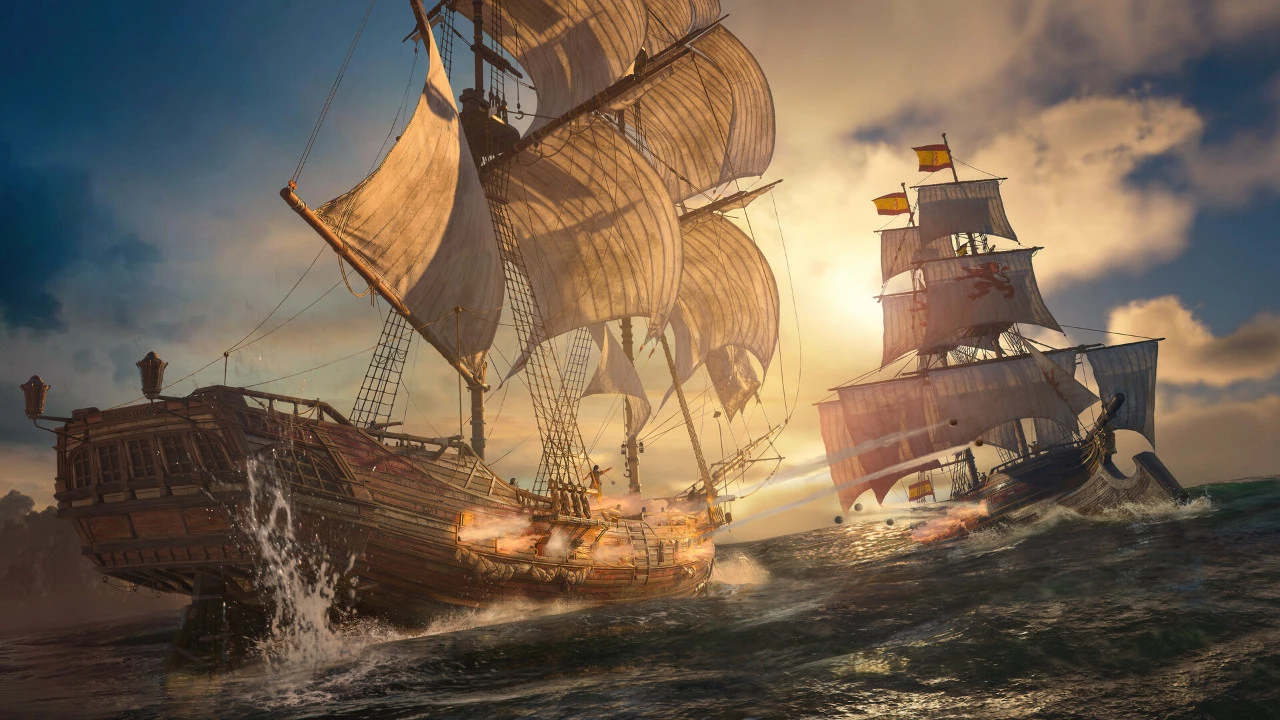
The romantic allure of the high seas, treasure-laden galleons, and the black flag flying against a crimson sunset has captivated human imagination for centuries. While pirate-themed games may not dominate the gaming industry’s landscape like military shooters or fantasy RPGs, they occupy a unique and beloved niche that continues to attract passionate players. From swashbuckling action adventures to complex naval strategy simulations, the genre offers remarkable diversity for those seeking to live out their corsair fantasies from the comfort of their gaming chairs. The appeal lies in the inherent freedom that piracy represents — the open ocean as your playground, with fortune and adventure waiting beyond every horizon.
Essential Pirate Games by Genre
- Assassin’s Creed Black Flag (2013) set the standard for pirate action-adventure with its blend of parkour combat and open-world naval exploration in the Caribbean.
- Sea of Thieves evolved from a sparse 2018 launch into a content-rich cooperative experience where player crews create emergent stories through shared voyages.
- Sid Meier’s Pirates! established the template for open-ended pirate simulation, combining sword duels, romance, treasure hunting, and fleet building since 1987.
- Strategy games like Port Royale and Tortuga emphasize trade route management, colonial politics, and resource logistics over reflexive combat.
- Pillars of Eternity II: Deadfire brought deep RPG storytelling to an archipelago setting with full ship command and crew management systems.
The golden age of piracy, spanning roughly from the 1650s to the 1730s, has provided endless inspiration for game developers. This era saw legendary figures like Blackbeard, Anne Bonny, and Bartholomew Roberts terrorizing merchant vessels across the Caribbean, Atlantic, and beyond. The historical reality was often brutal and short-lived for most pirates, but popular culture has transformed these outlaws into romantic antiheroes. Video games have embraced this mythologized version of piracy, creating experiences that blend historical authenticity with fantastical adventure, allowing players to command their own vessels and forge their own legends on the digital seas.
Action-Adventure Titles That Define the Genre
When most gamers think of pirate video games, action-adventure titles immediately come to mind. The Assassin’s Creed series made a dramatic splash with Black Flag in 2013, which many consider the definitive pirate gaming experience. Players stepped into the boots of Edward Kenway, a privateer-turned-pirate navigating the treacherous waters of the Caribbean during the early 18th century. The game masterfully combined the series’ signature parkour and combat mechanics with an expansive naval exploration system that let players engage in ship-to-ship combat, hunt for treasure, and interact with historical pirates like Blackbeard and Charles Vane. The success of Black Flag’s naval mechanics was so profound that Ubisoft later developed Skull and Bones, a multiplayer-focused pirate game that expanded on these systems.
Sea of Thieves, developed by Rare and released in 2018, took a different approach to pirate action. Rather than focusing on a single-player narrative, this shared-world adventure game emphasizes cooperative play and emergent storytelling. Players form crews, manage their ships together, and set sail in search of treasure while encountering other players who might be allies or enemies. The game’s stylized, cartoonish visuals and emphasis on player-driven experiences have cultivated a dedicated community. Regular content updates have transformed Sea of Thieves from a relatively bare-bones launch into a rich, content-filled adventure that continues to attract new players years after its initial release.
Fleet Management and Naval Strategy Games
| Game | Genre Focus | Release Year |
|---|---|---|
| Assassin's Creed Black Flag | Action-Adventure | 2013 |
| Sea of Thieves | Cooperative Multiplayer | 2018 |
| Sid Meier's Pirates! | Simulation/Strategy | 1987 / 2004 remake |
| Port Royale series | Economic Strategy | Various |
| Risen 2: Dark Waters | Action RPG | 2012 |
| Pillars of Eternity II: Deadfire | CRPG | 2018 |
For players who prefer cerebral challenges over reflexive combat, the strategy genre offers compelling pirate experiences. Sid Meier’s Pirates!, originally released in 1987 and remade in 2004, remains a benchmark for pirate simulation games. This open-ended adventure combined elements of action, strategy, and role-playing, allowing players to sail the Caribbean as a privateer, merchant, or outright pirate. Players could engage in sword duels, romance governors’ daughters, hunt for buried treasure, and build their fleet through conquest or purchase. The game’s freedom and replayability established a template that many subsequent pirate games would follow.
More recent strategy offerings include titles like Port Royale and Tortuga: A Pirate’s Tale, which focus on the economic and tactical aspects of Caribbean maritime life. These games challenge players to manage trade routes, build commercial empires, and engage in naval warfare to protect or expand their interests. The complexity of managing resources, crew morale, ship maintenance, and political relationships with various colonial powers provides a depth that appeals to strategy enthusiasts. For those seeking turn-based tactical combat, games like Blackwake and Naval Action offer focused experiences centered on realistic ship handling and period-accurate naval warfare.
RPGs and Indie Studios Reinventing Pirate Adventures
The role-playing game genre has also produced memorable pirate adventures. The Risen series, particularly Risen 2: Dark Waters, blended traditional RPG mechanics with a pirate setting, incorporating supernatural elements like voodoo magic and sea monsters. Players developed their characters through skill trees that included everything from swordsmanship to dirty fighting tricks. Meanwhile, indie developers have created gems like Pillars of Eternity II: Deadfire, which transported the critically acclaimed RPG series to an archipelago setting where players commanded their own ship and crew while engaging in the series’ signature deep storytelling and tactical combat.
The enduring appeal of pirate games reflects something fundamental about human nature — the desire for freedom, adventure, and the thrill of the unknown. Whether commanding a massive fleet in a strategy game, engaging in frantic naval combat in an action title, or exploring mysterious islands in an RPG, pirate games offer escapism into a romanticized world of adventure. As technology advances, future pirate games will undoubtedly push boundaries further, offering even more immersive experiences on the virtual high seas. For now, players have a treasure trove of excellent titles to explore, each offering its own interpretation of the pirate fantasy that has enchanted humanity for generations.
What Keeps Players Coming Back to the High Seas
Pirate games occupy a curious position in the market — never dominant like military shooters or fantasy RPGs, yet consistently attracting devoted players. The appeal stems from the inherent promise of freedom these games offer. The open ocean functions as both setting and metaphor, presenting players with horizons that suggest possibility rather than boundaries. This translates into gameplay systems that typically emphasize player choice over linear progression.
The genre’s diversity is notable. Action-adventure players get naval combat and exploration, strategy enthusiasts manage trade empires and fleet logistics, while RPG fans find character progression layered onto maritime settings. Few other historical themes support this range. The romanticized Golden Age of Piracy (1650s-1730s) provides familiar touchstones — Blackbeard, treasure maps, Caribbean islands — that developers can invoke without extensive exposition.
Live-service models have proven particularly effective here. Sea of Thieves demonstrated that continuous content updates can transform lukewarm launches into thriving communities. The social dynamics of crewing a ship together create natural hooks for cooperative play that keep players returning. Meanwhile, Ubisoft’s investment in Skull and Bones suggests major publishers still see growth potential in multiplayer naval combat focused on team coordination and emergent encounters.
Pirate Gaming Questions Answered
What is the best single-player pirate game for narrative experience?
Assassin’s Creed Black Flag remains the strongest narrative-driven option, following Edward Kenway’s story across the Caribbean with historical figures like Blackbeard and Charles Vane appearing throughout. Pillars of Eternity II: Deadfire offers deeper RPG storytelling with branching quests and companion relationships.
Can you play Sea of Thieves solo or does it require a crew?
Sea of Thieves supports solo play with smaller sloop vessels, though the game is designed around cooperative crewing. Managing a larger ship alone is technically possible but significantly harder. The social experience of coordinating with other players is central to the design.
Are there pirate games focused on realistic naval combat?
Naval Action emphasizes period-accurate ship handling and tactical combat with realistic sailing physics. Blackwake offers team-based multiplayer focused on authentic naval warfare mechanics rather than arcade-style action.
Expert Opinion: The pirate gaming genre is experiencing a renaissance, driven by the success of live-service titles like Sea of Thieves and the anticipated release of Skull and Bones. Industry analysts predict that the combination of improved naval physics engines and growing demand for cooperative multiplayer experiences will lead to more ambitious pirate games in the coming years. The key to success in this niche market lies in balancing historical authenticity with the fantastical freedom that makes pirate fiction so appealing to audiences worldwide.