



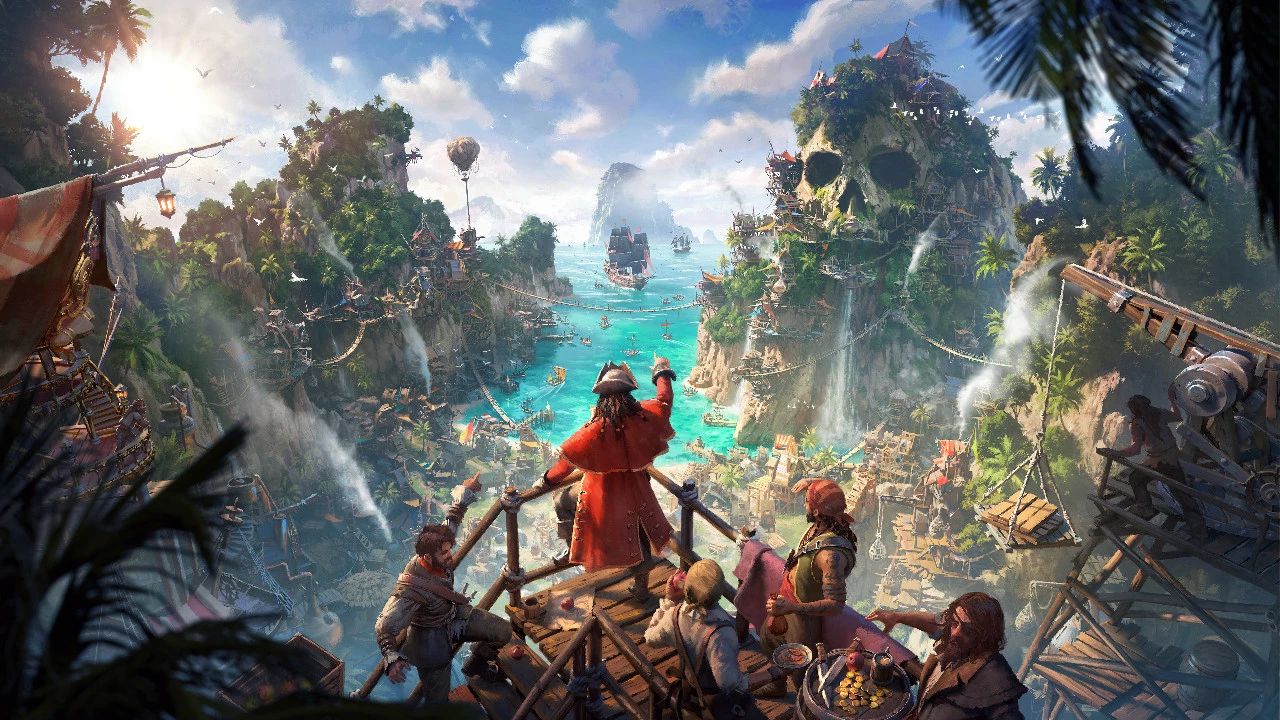
In the vast ocean of city-building strategy games, a new contender has emerged that promises to deliver a unique twist on familiar mechanics. Corsair Cove invites players to experience the golden age of piracy from an entirely fresh perspective, masterfully combining elements of urban planning, survival mechanics, complex logistics, and unforgiving economic management. Set on precarious patches of land squeezed between towering cliff faces and the raging ocean, this game challenges everything players thought they knew about building thriving communities.
Key Takeaways
- Vertical building on cliff faces requires 3D planning, with a physics engine that can collapse poorly designed structures into the sea during storms
- Economic simulation mirrors historical pirate realities: flooding markets crashes prices, underpaying crews triggers mutiny and desertion
- Survival mechanics demand constant attention to food, fresh water collection, disease outbreaks, and rival pirate raids
- Procedurally generated maps and multiple difficulty scenarios promise varied replayability with post-launch content already planned
The premise alone sets Corsair Cove apart from conventional city builders. Rather than sprawling plains or fertile valleys, players must carve out their pirate haven on treacherous vertical terrain where every square meter of buildable space becomes a precious commodity. The developers have crafted an environment that constantly reminds players of the harsh realities faced by historical pirate settlements, where survival depended on ingenuity, resourcefulness, and the ability to adapt to seemingly impossible conditions.
How Corsair Cove Reinvents Pirate City-Building
The city-building genre has enjoyed remarkable longevity in the gaming industry, with classics like SimCity establishing the foundation decades ago and modern titles like Cities: Skylines and Anno series pushing boundaries further. However, Corsair Cove distinguishes itself by introducing the pirate theme not merely as an aesthetic choice but as a fundamental gameplay mechanic. Historical pirate settlements such as Port Royal in Jamaica, Nassau in the Bahamas, and Tortuga served as inspiration for the game’s design philosophy. These real-world locations were notorious for their precarious existence, balancing between legitimate commerce and outright lawlessness.
The economic management system in Corsair Cove reflects the complex reality of pirate economics during the 17th and 18th centuries. Players must manage multiple revenue streams including plundered goods, legitimate trade, smuggling operations, and even ransom negotiations. The game implements a dynamic market system where flooding the market with stolen cargo can crash prices, while maintaining too large a fleet without adequate income leads to mutiny and desertion. This attention to historical economic detail elevates the experience beyond simple resource accumulation.
Vertical Construction and Survival Under Siege
| System | Key Features |
|---|---|
| Building | Cliff-anchored structures, rope bridges, structural integrity physics |
| Economy | Plunder, trade, smuggling, ransom, dynamic market pricing |
| Survival | Fishing, terraced farming, rainfall capture, disease management |
| Naval | Crew morale, ship maintenance, weather-dependent routes |
| Combat | Vessel upgrades, specialized crew, optional diplomatic alternatives |
Perhaps the most innovative aspect of Corsair Cove lies in its vertical building system. Unlike traditional city builders that operate primarily on a horizontal plane, this game forces players to think three-dimensionally. Structures must be anchored into cliff faces, connected by rope bridges and precarious walkways, and designed to withstand both the elements and potential attacks. The physics engine calculates structural integrity, meaning poorly planned construction can literally crumble into the sea during storms.
The survival elements add another layer of complexity that hardcore strategy enthusiasts will appreciate. Food supplies must be carefully managed through fishing, limited agriculture on terraced gardens, and raids on merchant vessels. Fresh water collection becomes a critical concern, with players constructing elaborate systems to capture rainfall and channel mountain springs. Disease outbreaks, storm damage, and rival pirate attacks keep players constantly engaged with multiple crisis management scenarios. The game draws clear inspiration from the actual challenges faced by isolated maritime communities throughout history.
Fleet Management, Naval Combat, and Endgame Depth
The logistics system in Corsair Cove deserves particular praise for its depth and realism. Managing a fleet of vessels requires attention to crew morale, ship maintenance, cargo capacity, and navigation routes. Players must balance the risk-reward calculations of longer voyages to richer hunting grounds versus shorter expeditions with guaranteed but modest returns. The game also incorporates weather patterns and seasonal variations that affect both naval operations and settlement sustainability.
Combat encounters, while not the primary focus, provide exciting punctuation to the building and management gameplay. Players can upgrade their vessels with better armaments, train specialized crew members, and develop tactics for different engagement scenarios. The game wisely keeps combat as a supporting element rather than overwhelming the strategic core, allowing players who prefer peaceful economic development to minimize military engagement through diplomacy and strategic alliances with other pirate factions.
Long-term replayability appears strong thanks to procedurally generated maps, multiple starting scenarios with varying difficulty levels, and an achievement system that encourages diverse playstyles. The developers have already outlined plans for post-launch content including new building types, additional factions, and expanded late-game challenges. For fans of city builders seeking something genuinely different, Corsair Cove offers a compelling voyage into uncharted territory where the romance of piracy meets the satisfaction of careful urban planning.
Carving a Niche in Vertical Terrain
Corsair Cove’s core bet is that city-building fans are hungry for spatial constraints that force creative problem-solving. By moving construction off flat grids and onto sheer rock faces, the game introduces engineering puzzles absent from most competitors. The structural-integrity physics raise the skill ceiling considerably, rewarding players who plan ahead while punishing those who overbuild without foundation support.
The economic layer pulls from genuine pirate-era dynamics—Port Royal, Nassau, Tortuga—rather than treating the theme as window dressing. Linking cargo gluts to price crashes and fleet costs to mutiny risk creates feedback loops that demand ongoing attention, not just early-game optimization. This could frustrate casual players but should appeal to fans of Anno or Tropico who enjoy economic juggling.
Long-term success hinges on post-launch follow-through. The developers have announced new factions, buildings, and late-game challenges, but procedural maps alone won’t sustain interest if balance issues emerge. Strategy communities tend to dissect systems quickly; responsiveness to that feedback will determine whether Corsair Cove becomes a cult staple or a curiosity.
Common Questions
Is Corsair Cove more city-builder or survival game?
It leans city-builder but weaves in survival elements like food, water, and disease. Combat exists but can be minimized through diplomacy, so players focused on construction won’t be forced into constant warfare.
How does vertical building actually work?
Structures anchor into cliff faces and connect via rope bridges. A physics engine tracks structural integrity, so overloading supports or skipping reinforcements can cause buildings to collapse, especially during storms.
Does the economy punish aggressive raiding?
Yes. Dumping too much plundered cargo crashes market prices, and maintaining a large fleet without matching income leads to crew desertion and mutiny—forcing balance between raiding and sustainable trade.
Expert Opinion: Corsair Cove represents an encouraging evolution in the city-building genre, demonstrating that innovation remains possible even in well-established gaming categories. The vertical building mechanics combined with pirate-era economics create a distinctive niche that could influence future titles. If the developers maintain their commitment to post-launch support and community feedback, this game has the potential to establish itself as a cult classic among strategy enthusiasts seeking depth beyond conventional urban simulators.