





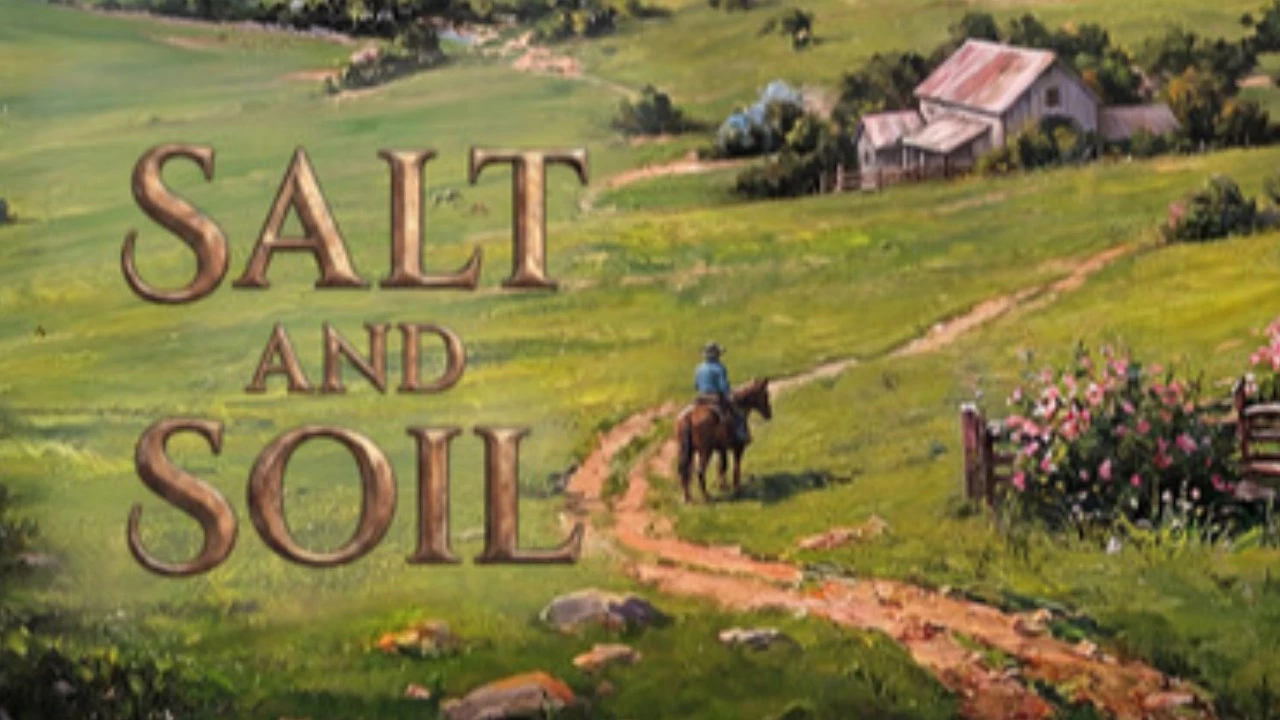
In a bold move that signals a potential shift in game development paradigms, veteran Russian game developer Sergey Orlovsky has officially announced Salt and Soil, a family colony simulator being developed almost entirely by a single person with extensive use of artificial intelligence. The announcement marks one of the first major instances where a prominent industry figure has openly embraced AI as a core development tool rather than concealing its involvement, potentially opening a new chapter in how video games are created and experienced.
The project is particularly notable for its ambitious scope combined with minimal human resources. Orlovsky, who has decades of experience in the gaming industry, claims the entire game is being developed by just one person over a six-month period. What makes this timeline feasible is the comprehensive integration of AI technologies throughout the development pipeline. Perhaps most intriguingly, artificial intelligence isn’t merely being used behind the scenes during production—it will also play an active role during actual gameplay, promising a dynamic experience that adapts and evolves as players progress through their colonial adventures.
A Veteran Developer Embraces Revolutionary Technology
Sergey Orlovsky is far from an unknown figure in the gaming world. As the founder of Nival Interactive, one of Russia’s most successful game development studios, he has been responsible for numerous acclaimed titles over the years, including the Heroes of Might and Magic V series and various other strategy games that have garnered international recognition. His decision to publicly acknowledge and champion AI-assisted development carries significant weight within the industry, potentially encouraging other developers to be more transparent about their own use of these technologies.
The gaming industry has maintained a complicated relationship with artificial intelligence in recent years. While many studios have quietly incorporated AI tools for various aspects of development—from procedural content generation to quality assurance testing—few have been willing to publicly acknowledge this fact. Concerns about public perception, potential backlash from players who value human craftsmanship, and ongoing debates about AI’s impact on creative industries have kept most developers tight-lipped about their AI usage. Orlovsky’s announcement represents a deliberate departure from this approach, suggesting that at least some industry veterans believe the time has come for greater transparency.
Salt and Soil: A New Approach to Colony Simulation
Salt and Soil promises to offer players a unique take on the colony simulation genre by focusing on family dynamics rather than purely economic or military considerations. The game will task players with managing and growing a colonial settlement while navigating the complex interpersonal relationships between family members across multiple generations. This emphasis on human connections within a strategic framework could provide fresh gameplay opportunities that distinguish the title from more traditional entries in the genre.
The integration of AI during gameplay itself raises fascinating possibilities for emergent storytelling and adaptive challenge systems. While specific details about implementation remain limited at this stage, the concept suggests that AI could potentially generate unique events, character interactions, or environmental challenges based on player decisions and colony development. This approach could theoretically provide infinite replayability while maintaining narrative coherence—a goal that has challenged game designers for decades using traditional scripted content.
Industry Implications and the Future of Game Development
The announcement arrives at a pivotal moment for the intersection of gaming and artificial intelligence. As AI tools become increasingly sophisticated and accessible, questions about their appropriate role in creative industries have sparked heated debates among developers, artists, and consumers alike. Some view AI as a democratizing force that enables smaller teams or solo developers to compete with major studios, while others worry about potential job displacement and the erosion of human creativity in game design. Orlovsky’s project will undoubtedly serve as a closely watched case study for both camps.
The six-month development timeline mentioned by Orlovsky represents a dramatic acceleration compared to traditional game development schedules, which often span years even for modestly scoped projects. If Salt and Soil delivers a polished, content-rich experience within this timeframe, it could fundamentally reshape industry expectations about development efficiency and team size requirements. However, skeptics will likely reserve judgment until the final product can be evaluated on its own merits, regardless of how it was created.
Expert Opinion: Orlovsky’s transparent approach to AI-assisted development may prove more significant than the game itself. As generative AI tools mature, we’re likely to see a bifurcation in the market: AAA studios will continue emphasizing human artistry as a premium differentiator, while a new wave of indie developers leverage AI to punch above their weight class. The key question isn’t whether AI belongs in game development—it’s already there—but whether consumers will accept this reality when presented honestly.